

To practice accents without building bad habits, focus on mastering intonation patterns and pronunciation through targeted drills. Actively listen to native speakers, analyze their rhythm and pitch, and mimic natural speech flow. Record yourself and seek feedback to correct mistakes early. Incorporate focused listening exercises to develop your ear for subtle differences. Consistently practicing with attention to detail helps build good habits. Keep exploring, and you’ll discover even more effective techniques to perfect your accent.

Get everyday helpers delivered free with Prime
- Fast, free delivery on millions of items
- Prime Video, Amazon Music and more included
- Member-only deals all year
Key Takeaways
- Focus on mimicking natural intonation patterns rather than just repeating words to avoid developing robotic speech habits.
- Regularly record and compare your practice sessions to identify and correct incorrect pronunciation early.
- Use targeted pronunciation drills combined with listening exercises to build muscle memory without ingraining errors.
- Seek feedback from native speakers or coaches to ensure authentic accent development and prevent bad habits.
- Incorporate focused listening and analysis of authentic recordings to internalize correct speech flow and avoid copying mistakes.
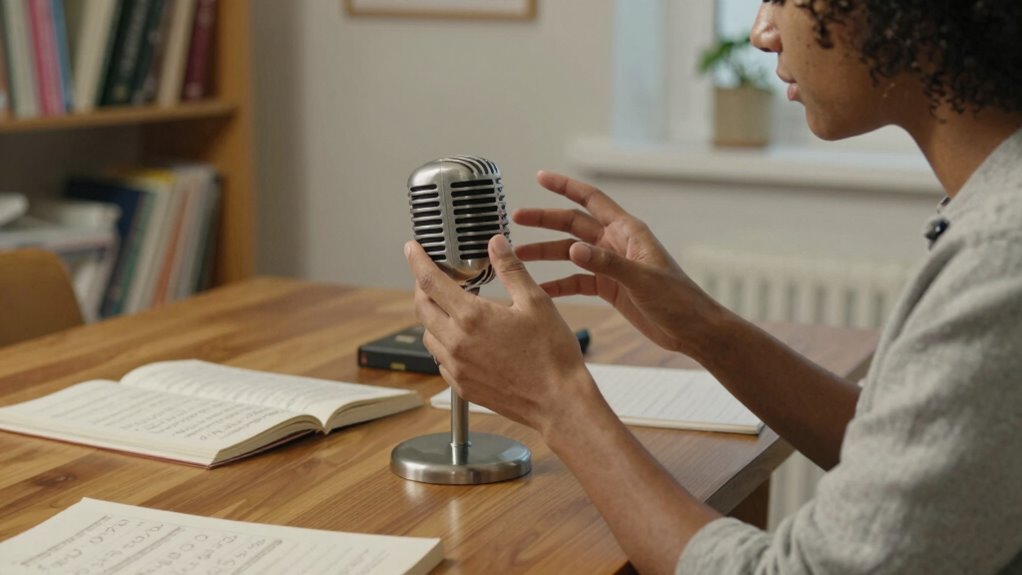
Have you ever wondered how actors or voice artists master different accents? It’s a skill that takes dedication, precision, and a keen ear. One of the most effective ways to develop authentic accents is by focusing on intonation patterns. These are the musical aspects of speech—rise and fall in pitch—that give an accent its unique flavor. Instead of just copying words, pay close attention to how the speaker’s voice naturally rises or drops at specific moments. Mimicking these patterns helps you sound more genuine and less like you’re simply reading lines. To get this right, start with pronunciation drills that target tricky sounds. Repeating specific words and phrases helps your mouth get used to the new muscle movements, and it’s a good way to build muscle memory. When you combine pronunciation drills with a focus on intonation, you’re training your brain and voice to produce the sounds and rhythmic patterns that define an accent.
Another key is to listen actively. Find recordings of native speakers and analyze their speech. Focus not just on individual words but on how they deliver sentences—the rhythm, pitch, and stress. This will help you internalize the natural flow of the accent. To avoid developing bad habits, it’s essential to get feedback. Record yourself and compare it to the original, then adjust accordingly. If possible, work with a coach or native speaker who can point out subtle differences and correct your pronunciation or intonation errors early on. Additionally, understanding the anatomy of speech and watt-hours, capacity, selection in tools like battery inverter generators can sharpen your ear for technical details, much like honing your listening skills for accents. Developing an ear for subtle differences is crucial to refining your accent skills and avoiding common mistakes. Incorporating listening exercises that focus on intonation and rhythm can further enhance your ability to distinguish and reproduce authentic speech patterns. Engaging in focused practice with specific attention to these elements can significantly accelerate your progress and help prevent the formation of bad habits. Practicing with awareness of speech anatomy can also improve your overall control and consistency.
accent training pronunciation drills
As an affiliate, we earn on qualifying purchases.
As an affiliate, we earn on qualifying purchases.
Frequently Asked Questions
How Long Should I Practice Each Day for Effective Accent Improvement?
You should practice for about 20 to 30 minutes daily to see effective accent improvement. Focus on maintaining intonation consistency and pronunciation clarity during each session. Short, consistent practice helps prevent bad habits and keeps you engaged. Avoid overdoing it, as fatigue can hinder progress. Regular, mindful practice allows your accent to develop naturally without strain, ensuring steady improvement while preserving the quality of your pronunciation.
Can I Mix Different Accents During Practice Sessions?
Mixing different accents during practice can be beneficial if you focus on regional authenticity. Don’t worry about blending accents; it actually helps you understand their nuances better. Just make sure you’re aware of the specific features of each accent and don’t confuse them. Practicing variations can improve your flexibility and make your overall accent skills more dynamic, as long as you stay mindful of maintaining authentic regional characteristics.
What Are Common Mistakes to Avoid When Practicing Accents?
When practicing accents, avoid common mistakes like neglecting intonation consistency and vowel clarity. You might overemphasize certain sounds or imitate exaggerated patterns, which can lead to bad habits. Instead, focus on maintaining natural intonation and clear vowels. Listen carefully to native speakers, practice regularly with feedback, and stay mindful of subtle pronunciation details. This approach helps develop an authentic accent without ingraining inaccurate speech patterns.
Is It Better to Practice Alone or With a Coach?
Picture yourself steering a river—solo practice is like paddling alone, giving you independence but risking bad habits if you’re not careful. With coaching benefits, you have a guide who helps correct your course quickly. Practicing alone sharpens your skills, yet coaching guarantees you avoid pitfalls. Combining both methods offers the best journey, balancing self-reliance with expert guidance to perfect your accent efficiently and confidently.
How Do I Know if My Accent Sounds Authentic?
You can tell if your accent sounds authentic by listening carefully to native speakers, focusing on intonation patterns and regional slang. Record yourself speaking and compare it to authentic recordings. If your speech captures the natural rise and fall of intonation and includes local slang, you’re on the right track. Consistent practice with real accents helps you develop a genuine sound, so stay immersed and seek feedback from native speakers whenever possible.
native speaker accent recordings
As an affiliate, we earn on qualifying purchases.
As an affiliate, we earn on qualifying purchases.
Conclusion
Remember, mastering an accent isn’t just about mimicking sounds; it’s about embracing a new way of speaking and connecting with different cultures. If you practice mindfully and avoid shortcuts, you’ll build a genuine skill that lasts. Don’t let the fear of mistakes hold you back—every stumble is a step closer to fluency. Your voice is a bridge to new worlds—step confidently onto it, and let your passion lead the way.
voice recording microphone for language practice
As an affiliate, we earn on qualifying purchases.
As an affiliate, we earn on qualifying purchases.
As an affiliate, we earn on qualifying purchases.
Halloween Picks
halloween
As an affiliate, we earn on qualifying purchases.