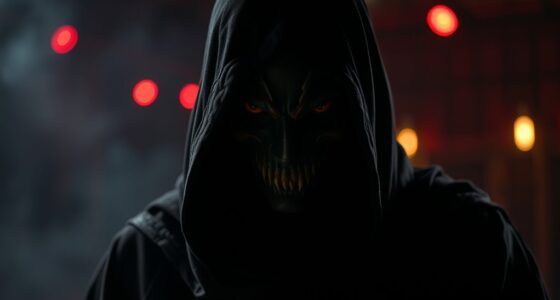

To sound menacing with villain laughs, vary your pitch and tempo—switch between wild, manic giggles and slow, deliberate chuckles. Use pauses to build tension, making your laugh unpredictable and unsettling. Focus on facial expressions and body language, like a sneering stare or smirk, to add depth. Practice blending chaotic and controlled sounds to create a versatile, chilling sound. Master these techniques to craft authentic, terrifying laughs that keep your audience on edge—discover more techniques to perfect your craft.
Key Takeaways
- Vary pitch and tempo, alternating between manic giggles and slow, deliberate chuckles for unpredictability.
- Use pauses strategically to build tension and emphasize the laugh’s sinister or chaotic nature.
- Incorporate exaggerated facial expressions and body language, like wide grins or intense stares.
- Combine chaotic clown-like laughter with controlled, sinister chuckles to create a versatile, disturbing sound.
- Practice blending unpredictable sounds with subtlety to evoke chaos or calculated menace effectively.
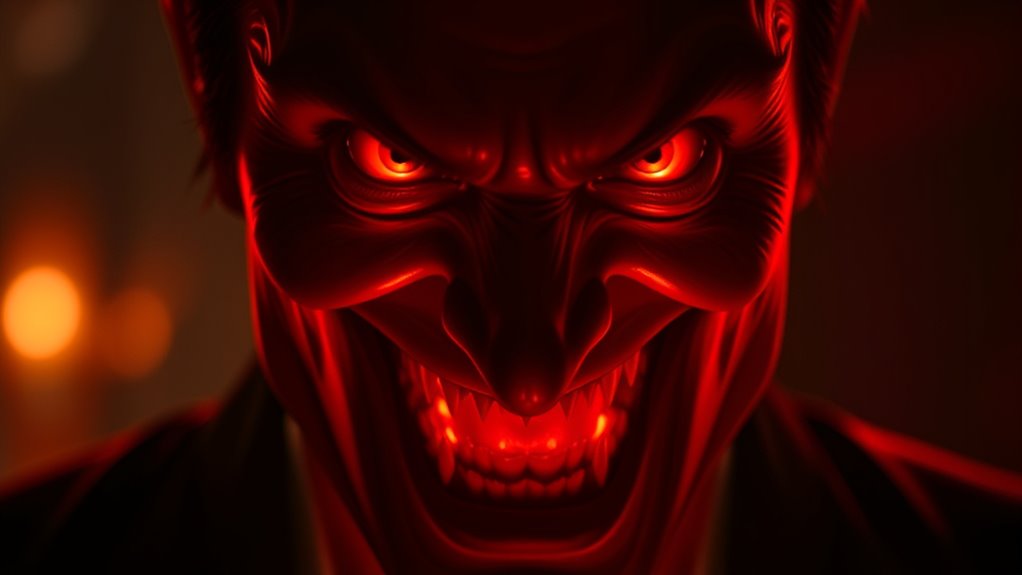
Have you ever noticed how a villain’s laugh instantly reveals their sinister nature? It’s a powerful tool that communicates malice without a single word. When you mimic a villain’s laugh, you’re tapping into a deep well of emotional cues that instantly set a dark tone. One of the most recognizable types is clown laughter, which combines exaggerated, almost manic tones with an unsettling edge. This kind of laugh, often loud and unpredictable, can evoke discomfort even in innocent contexts. When you imitate a clown’s laughter, aim for a wide, exaggerated grin that stretches your face, and add a slightly uneven pitch to create that unnerving, unpredictable quality. Clown laughter is effective because it’s associated with chaos and unpredictability, making your character seem unhinged and dangerous.
A clown’s laugh combines exaggerated tones with unpredictability, evoking chaos and danger in your villainous portrayal.
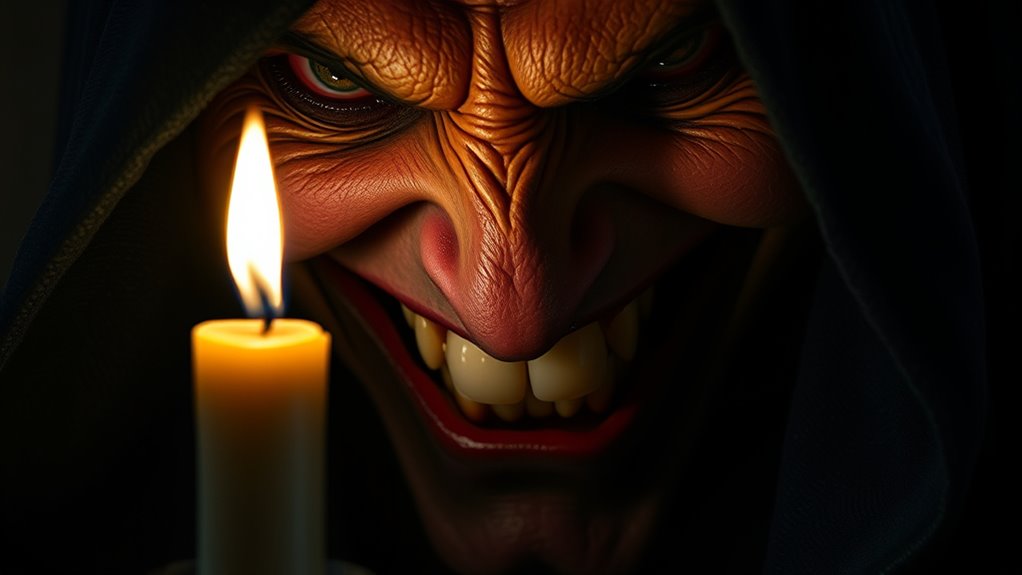
On the other hand, sinister chuckles take a different approach. These are usually lower, more measured, and deliberately controlled. Instead of overwhelming loudness, they rely on subtlety and timing. A sinister chuckle might start as a soft, almost inaudible sound, then grow in intensity, catching your audience off guard. To master this, breathe steadily, maintain a calm expression, and let the laughter build gradually. It’s the contrast between your composed demeanor and the creeping menace of your chuckle that makes it so chilling. This type of laugh signals that the villain is calculating, confident, and enjoys their own malevolence. Developing this skill can be reinforced by understanding how attention enhances your ability to deliver a convincing and menacing performance.
When you combine clown laughter’s chaotic energy with sinister chuckles’ calculated menace, you craft a versatile and compelling villain laugh. Practice varying your pitch and tempo, switching from wild, high-pitched giggles to slow, deliberate chuckles. Use pauses to build tension, letting your audience anticipate the next laugh. Remember, the key isn’t just the sound but the timing and context. A sudden, unexpected laugh can be more disturbing than a consistent one. Also, pay attention to your facial expressions and body language—an uneasy smirk or a cold stare enhances the effect.
Ultimately, the most menacing villain laughs aren’t just about the sound; they’re about the feeling you evoke. Whether it’s the unpredictable chaos of clown laughter or the calculated menace of sinister chuckles, your goal is to make your audience feel unsettled. Practice these techniques, and you’ll develop a villain laugh that leaves a lasting, chilling impression.

RIBOSY Laugh Button – Evil and Wicked Laughs Sound Effects – Unbound,Untamed,Unusual Noise Maker
🤡 Unusual pressing the button on the top, unique sound, bursting effect
As an affiliate, we earn on qualifying purchases.
As an affiliate, we earn on qualifying purchases.
Frequently Asked Questions
What Are Some Common Mistakes When Trying to Sound Menacing?
When trying to sound menacing, you often make mistakes like overacting, which makes your voice sound exaggerated and less believable. Inconsistency in tone or pace also weakens your menace, making you seem unsure or unconvincing. To avoid these, stay grounded and focused on subtlety. Practice controlling your voice, avoid overdramatization, and maintain a steady, confident tone to truly sound menacing and impactful.
How Can Actors Improve Their Villain Laugh Authenticity?
Did you know that actors with better voice modulation are 60% more convincing as villains? To improve your villain laugh authenticity, focus on emotional depth and experiment with different tones. Practice slow, deliberate breathing to control your voice, and tap into the character’s darker emotions. Record yourself, analyze the recordings, and refine your laugh to make it sound genuine and menacing. This enhances your overall portrayal and captivates your audience.
Are There Cultural Differences in Villain Laugh Styles?
Yes, there are cultural differences in villain laugh styles. You might notice that cultural humor influences how villains express their laughs, making them more menacing or humorous depending on the region. Regional accents also add unique qualities, shaping the tone and delivery. When you understand these nuances, you can craft a villain laugh that resonates authentically within different cultural contexts, making your performance more believable and impactful.
How Does Voice Pitch Affect the Perception of Menace?
Your voice pitch acts like a weapon, shaping how menacing you sound. When you use voice modulation and pitch variation, you make your voice more intimidating, like a thunderstorm ready to strike. A lower pitch often feels more threatening, while a higher pitch can seem unsettling or unstable. Mastering these techniques helps you control perceptions of menace, making your voice a powerful tool to evoke fear or authority.
Can Digital Effects Enhance a Villain’s Laugh?
Yes, digital effects can greatly enhance a villain’s laugh. You can use digital manipulation to deepen or distort the sound, making it more menacing. Sound layering allows you to combine different elements, adding echoes or sinister undertones. These techniques help create a unique, memorable laugh that amplifies menace, making your villain more intimidating and compelling. Experimenting with these effects gives you endless possibilities to craft the perfect villain’s laugh.

California Costumes Last Laugh Clown Mask Standard Gray
Mask
As an affiliate, we earn on qualifying purchases.
As an affiliate, we earn on qualifying purchases.
Conclusion
As you let out that wicked laugh, imagine shadows curling around your voice, echoing with menace. Feel the rush of power as your laugh cuts through the silence, like a jagged blade gleaming in the dark. Each sinister chuckle wraps the scene in a chilling embrace, leaving your audience trembling. Embrace the haunting rhythm, and soon, your villainous laugh will become a weapon—an unforgettable echo that lingers long after the silence falls.

AI Voice Recorder, 64GB Note Taking Device w/Magnetic Case, App Control, AI Technology Transcribe & Summarize Free, 121 Languages, 45H Battery, Audio Recorder for Lectures Meetings Calls
𝗡𝗲𝘅𝘁-𝗚𝗲𝗻 𝗔𝗜 𝗡𝗼𝘁𝗲 𝗧𝗮𝗸𝗶𝗻𝗴 𝗗𝗲𝘃𝗶𝗰𝗲 𝘄𝗶𝘁𝗵 𝗚𝗣𝗧-𝟰𝗼 𝗜𝗻𝘁𝗲𝗴𝗿𝗮𝘁𝗶𝗼𝗻: Transform your productivity with this advanced AI voice recorder that…
As an affiliate, we earn on qualifying purchases.
As an affiliate, we earn on qualifying purchases.

Dolls
As an affiliate, we earn on qualifying purchases.
As an affiliate, we earn on qualifying purchases.