
If you’re choosing between AI noise reduction and traditional plug-ins, AI tools offer faster, more user-friendly solutions that can deliver real-time results with minimal effort. They adapt to varying noise environments and simplify achieving professional sound quality, especially if you need quick adjustments. However, traditional plug-ins provide more control for detailed editing, though they take longer to tune. Stick with this guide, and you’ll discover which option suits your workflow best.
Key Takeaways
- AI noise reduction offers faster, real-time results, ideal for quick workflows and live monitoring.
- Traditional plug-ins provide more manual control and precise fine-tuning for detailed editing.
- AI algorithms adapt better to different noise environments, but may struggle with complex sounds.
- Traditional methods risk artifacts or muffling if not carefully adjusted, while AI simplifies the process.
- Choice depends on workflow needs: AI for speed and ease, traditional for control and nuance.
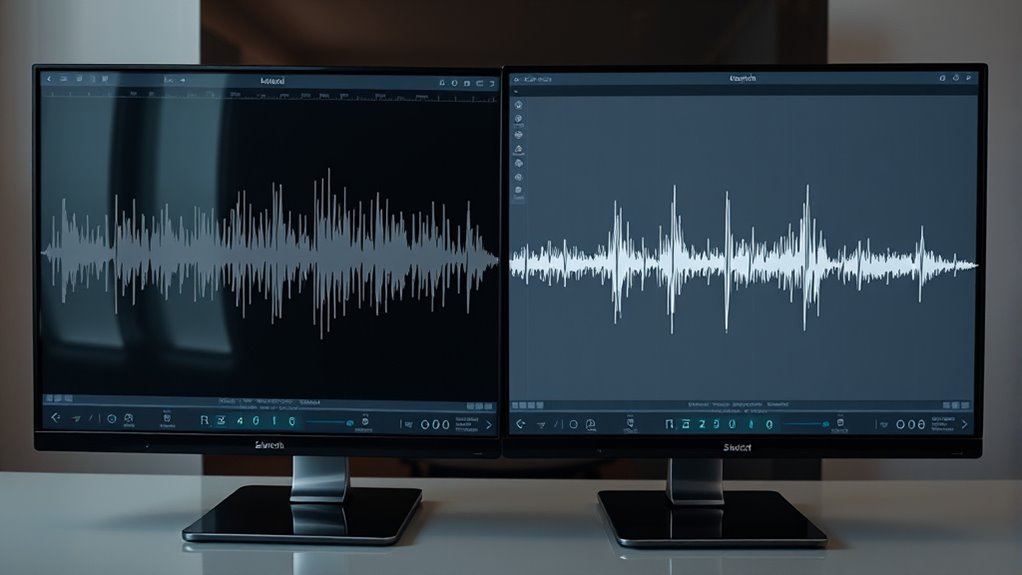
When it comes to reducing unwanted noise in audio recordings, you might wonder whether to rely on traditional plug-ins or embrace the latest AI-powered solutions. Both approaches aim to improve sound quality, but they do so differently, especially in terms of real-time processing and user accessibility. Traditional noise reduction plug-ins have been around for years, offering proven algorithms that often require manual tweaking. They typically process audio in chunks or batches, which means you need to wait for the software to analyze and clean up your recordings. This can be time-consuming, especially when working on lengthy sessions, but it also offers a level of control that some users prefer. However, these plug-ins sometimes struggle with balancing noise reduction and preserving natural sound, often introducing artifacts or muffling the audio if not carefully adjusted.
On the other hand, AI noise reduction tools are designed to handle noise more dynamically, often capable of real-time processing. This means you can monitor and adjust audio as you record or mix, *substantially* reducing the delay between capturing sound and hearing the cleaned output. This instant feedback is a game-changer for creators who need quick results or are working under tight deadlines. Additionally, AI solutions tend to be more user-friendly, thanks to their intuitive interfaces and automated features. You don’t always need to be an expert to achieve professional-sounding results, as AI algorithms intelligently identify noise patterns and reduce them with minimal input. This accessibility makes AI noise reduction appealing to a broader range of users, from beginners to seasoned engineers.
Moreover, AI noise reduction often leverages advanced algorithms that can adapt to various noise environments more effectively than traditional methods.
However, the ease of use and speed offered by AI tools might come with some trade-offs. While many AI solutions are impressive at removing consistent background noise, they can sometimes struggle with complex or unpredictable sounds. *Furthermore*, some users worry about the “black box” nature of AI—less visibility into exactly how the noise is being processed. Despite these concerns, the convenience of real-time processing and high user accessibility make AI noise reduction a compelling choice for many. It allows you to focus more on your creative process rather than technical tweaks, streamlining workflows and improving efficiency. Whether you lean towards traditional plug-ins or AI-powered solutions, understanding these key differences helps you pick the right tool tailored to your needs and workflow.
Top picks for "noise reduction traditional"
Open Amazon search results for this keyword.
As an affiliate, we earn on qualifying purchases.
Frequently Asked Questions
How Does AI Noise Reduction Adapt to Different Audio Environments?
AI noise reduction adapts to different audio environments by leveraging adaptive algorithms that analyze real-time sound patterns. You’ll notice it adjusts quickly to environmental variability, effectively distinguishing between unwanted noise and desired audio. This dynamic process allows the system to optimize noise suppression without sacrificing audio quality. As a result, your recordings stay clear and natural, even when ambient conditions change unexpectedly, ensuring consistent sound clarity across diverse environments.
Can Traditional Plug-Ins Handle Real-Time Noise Reduction Effectively?
Traditional plug-ins are like old radios—reliable but sometimes limited. They can handle real-time noise reduction, but hardware limitations and plugin compatibility can cause delays or glitches. If your system struggles with processing power, you might experience latency or reduced audio quality. For smooth, effective noise suppression, guarantee your hardware meets the plugin’s requirements, and choose ones optimized for real-time use to get the best results.
What Are the Long-Term Maintenance Costs of AI Versus Traditional Tools?
You’ll find that AI noise reduction tools often have higher initial costs but lower long-term maintenance expenses due to fewer updates needed. They require less frequent upgrades, which simplifies cost management over time. Traditional plug-ins may be cheaper upfront but can incur higher costs for upgrades and troubleshooting. Overall, AI tools tend to save you money long-term, especially if you prioritize reducing ongoing maintenance and upgrade frequency.
Do AI Noise Reduction Tools Require Internet Connectivity to Function?
AI noise reduction tools often require internet connectivity to access cloud-based processing, but some offer offline operation options. If you prefer working without internet, look for tools that are hardware-dependent or have dedicated offline modes. Keep in mind, offline operation might limit updates or advanced features. So, choose a solution based on your need for internet independence and hardware capabilities, ensuring consistent noise reduction during all your recordings.
How Do User Skill Levels Impact the Effectiveness of Each Method?
Your user proficiency substantially impacts how well AI noise reduction and traditional plug-ins work for you. If you’re experienced, you’ll navigate both methods more easily, reducing the learning curve and achieving better results. Beginners might struggle with AI tools’ advanced features or traditional plug-ins’ settings, so investing time to learn each helps maximize their effectiveness. Ultimately, your familiarity with audio editing enhances noise reduction quality, regardless of the method you choose.
Conclusion
Ultimately, choosing between AI noise reduction and traditional plugins depends on your needs. AI tools offer quick, intelligent solutions, while traditional plugins provide more control and customization. Consider your workflow and priorities—sometimes, “the devil is in the details.” No matter what you pick, remember that the best results come from understanding your tools and applying them thoughtfully. With patience and practice, you’ll find the perfect balance for crystal-clear audio every time.