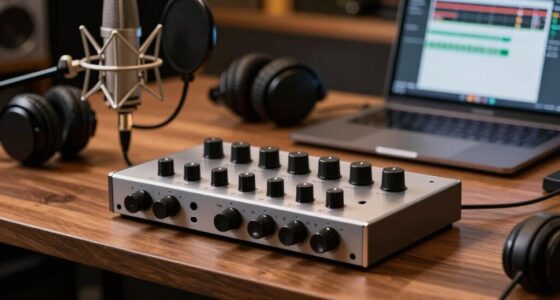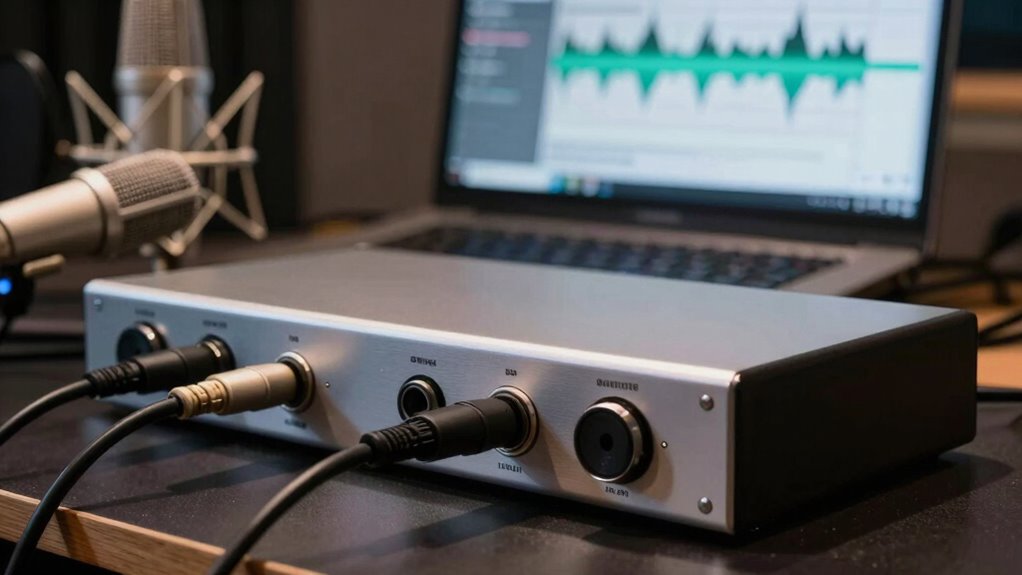

A 2-channel interface is enough for most voice work because it simplifies your setup while delivering high-quality audio. It allows you to connect your microphone and secondary device easily, reducing technical frustrations. With professional sound clarity and minimal latency, you get clean recordings every time. The compact design makes it portable and easy to use, whether you’re at home or on the go. Keep exploring to discover how this setup can boost your voice projects even further.
Key Takeaways
- Most voice work involves a single microphone, making two channels sufficient for clear, high-quality audio capture.
- Dual channels allow for a main microphone and a secondary device, like a headphone mix or secondary mic, enhancing flexibility.
- Simplified connectivity reduces setup complexity, ideal for quick, efficient voice recordings or streaming.
- High-quality preamps and converters on a 2-channel interface ensure professional sound without additional gear.
- For multi-person recordings, additional microphones can be managed through mixers or multiple recordings, not necessarily requiring more interface channels.
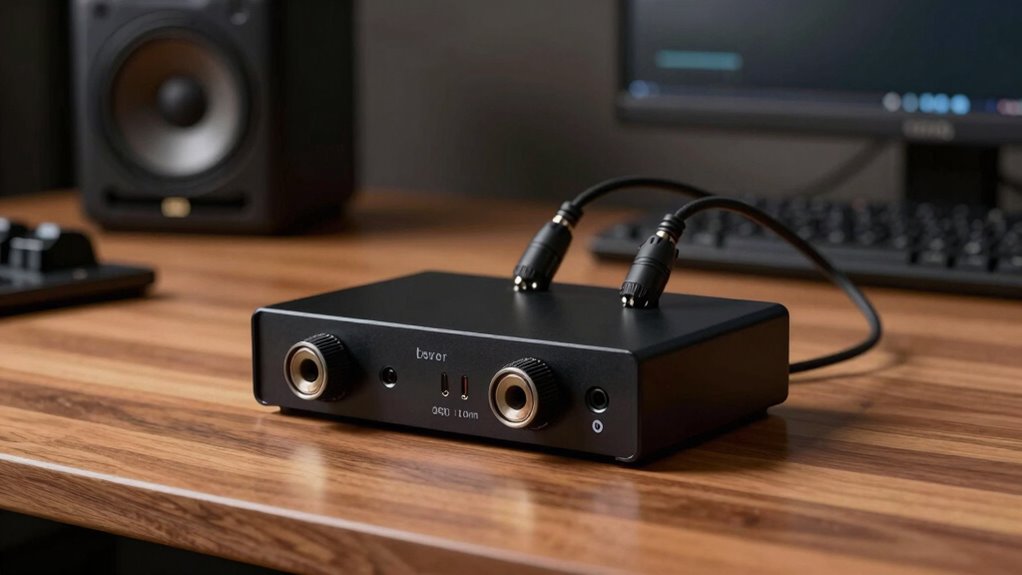
A 2-channel interface is essential for anyone serious about voice work because it simplifies how you connect and manage your audio sources. With just two inputs, you can easily plug in your microphone and a secondary device, like a music player or a backup microphone, without the hassle of complicated setups. This streamlined approach guarantees that your workflow remains smooth and efficient, allowing you to focus on your performance rather than wrestling with gear. When it comes to audio quality, a good 2-channel interface provides clear, professional sound, making your voice stand out with crisp clarity. You won’t need to worry about latency issues or distorted signals, as many models offer high-quality preamps and converters that preserve the integrity of your voice recordings. This is particularly important because the right equipment can make a significant difference in capturing every nuance of your vocal performance. Additionally, many 2-channel interfaces feature audio quality enhancements that further improve your recording clarity and fidelity. Equipment compatibility is another key advantage of a 2-channel interface. Most models are designed to work seamlessly with popular digital audio workstations (DAWs), streaming platforms, and broadcasting setups. As long as your computer or recording device supports USB or Thunderbolt connections, compatibility is rarely an issue. This means you won’t have to invest in multiple adapters or worry about compatibility conflicts, saving you both time and money. Additionally, many 2-channel interfaces are compact and portable, making them ideal for home studios, mobile setups, or on-the-go recordings. Their simplicity means there’s less to troubleshoot when connecting different equipment, reducing setup time and potential technical frustrations. Ease of setup is another benefit, as fewer channels typically mean a more straightforward connection process, especially for beginners. It’s also worth noting that reliable connectivity is crucial for maintaining consistent recording quality, especially during live sessions or streaming. A well-designed interface can also help prevent signal noise, ensuring a clean sound in every recording. While some might think that larger interfaces with more channels are necessary for complex projects, for most voice work—whether podcasting, voice acting, or streaming—a 2-channel interface is more than enough. It provides the essential inputs you need without overwhelming you with extra features you won’t use regularly. The focus remains on high-quality audio capture and reliable connectivity, which are the cornerstones of professional voice work. Investing in a well-built 2-channel interface ensures you get excellent audio quality and equipment compatibility, giving you a dependable foundation to produce clear, professional recordings. For most voice artists, it’s the perfect balance of simplicity and performance, enabling you to deliver your best work with less fuss and more confidence.

Focusrite Scarlett Solo 3rd Gen USB Audio Interface for Guitarists, Vocalists, Podcasters or Producers to record and playback studio quality sound
Pro performance with great pre-amps – Achieve a brighter recording thanks to the high performing mic pre-amps of…
As an affiliate, we earn on qualifying purchases.
As an affiliate, we earn on qualifying purchases.
Frequently Asked Questions
Can a 2-Channel Interface Handle Multiple Vocalists Simultaneously?
A 2-channel interface can handle multiple vocalists simultaneously if you use a mixer or software to combine their signals. This setup works well for recording vocal harmonies or group vocals, boosting recording efficiency. You’ll need to guarantee proper balancing and input management, but with careful setup, it’s possible to capture multiple voices clearly, making it a practical choice for smaller projects or practice sessions.
Is a 2-Channel Interface Suitable for Live Streaming Voice Performances?
Yes, a 2-channel interface is suitable for live streaming voice performances. You can effectively manage microphone positioning to optimize sound quality and minimize background noise. Just make certain your microphone is close enough and properly positioned, which helps reduce unwanted sounds. While limited in inputs, it’s perfect for solo performances or simple setups, allowing you to focus on clear, high-quality audio without the need for complex equipment.
How Does a 2-Channel Interface Compare to Multi-Channel Options for Voice Clarity?
A 2-channel interface offers solid voice clarity with good stereo separation, making your recordings sound natural and balanced. While multi-channel options might handle complex setups, a 2-channel keeps background noise minimal and focuses on your voice. You can easily achieve clear, professional results without the complexity of more channels, making it ideal for most voice work where simplicity and quality are key.
Do I Need Special Cables or Adapters for a 2-Channel Interface?
You don’t usually need special cables or adapters for a 2-channel interface. For example, if you connect a microphone with an XLR output, you’ll just need an XLR cable compatible with your interface’s inputs. Most interfaces support standard cables, so check your device’s specifications. Generally, you won’t require extra adapters unless you’re connecting incompatible equipment, making setup straightforward and hassle-free.
Can I Expand a 2-Channel Interface With Additional Inputs Later?
Yes, you can expand a 2-channel interface later, but it depends on your recording software and interface compatibility. Many interfaces support adding external preamps or using digital mixers, which can increase your input channels. Check if your recording software recognizes multiple devices or supports aggregate device setups. Ensuring compatibility beforehand helps you seamlessly upgrade without losing functionality, making your setup more flexible as your needs grow.

M-AUDIO M-Track Duo USB Audio Interface for Recording, Streaming and Podcasting with Dual XLR, Line and DI Inputs, plus a Software Suite Included
Podcast, Record, Live Stream, This Portable Audio Interface Covers it All – USB sound card for Mac or…
As an affiliate, we earn on qualifying purchases.
As an affiliate, we earn on qualifying purchases.
Conclusion
Ultimately, a 2-channel interface gently guides you through most voice projects, offering just enough space for your creativity to flourish without overwhelming your setup. It’s like having a trusted companion that subtly supports your artistry, allowing the nuances of your voice to shine through. While there’s always room to explore, sometimes simplicity quietly enriches your craft, letting you focus on what truly matters—your voice’s unique story.

PIYONE Audio Interface, 2X2 24-bit/192kHz Interface for High-Fidelity, Studio Quality PC/Mac/iOS Recording, XLR/TRS Combo Input, Monitor Mix/Loopback Function, One-Cable Setup(Alloy Red)
PIYONE Plug-and-Play USB C Audio Interface. Experience seamless connectivity with this class-compliant audio interface for Mac and PC….
As an affiliate, we earn on qualifying purchases.
As an affiliate, we earn on qualifying purchases.
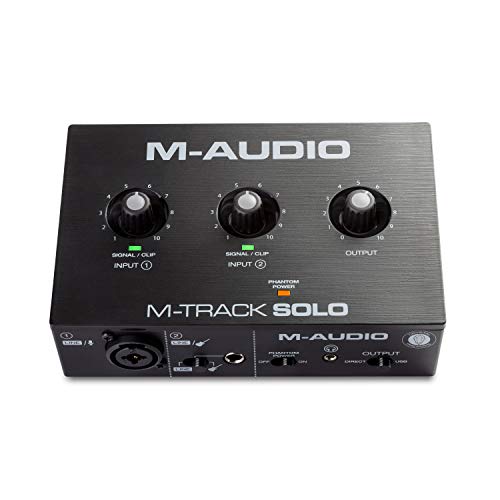
M-AUDIO M-Track Solo USB Audio Interface for Recording, Streaming and Podcasting with XLR, Line and DI Inputs, Plus a Software Suite Included
Podcast, Record, Live Stream, This Portable Audio Interface Covers it All – USB sound card for Mac or…
As an affiliate, we earn on qualifying purchases.
As an affiliate, we earn on qualifying purchases.