If you’re recording in a bad room, a dynamic microphone is your best option because it rejects more ambient noise and echoes, giving you cleaner sound. Condenser mics, while more detailed, tend to pick up room reflections and background noise, which can ruin your recordings in poor environments. Choosing the right microphone makes a big difference, but understanding how your space affects audio is key—keep going to find out more tips to improve your recordings.
Key Takeaways
- In poorly treated rooms, dynamic microphones generally produce cleaner recordings by rejecting ambient noise and reflections.
- Condenser microphones are more sensitive and prone to capturing room echo and background noise in bad acoustics.
- Acoustic treatment and environment improvements enhance condenser mic performance, but may not fully mitigate room flaws.
- Choosing a dynamic mic is a practical, budget-friendly solution for recording in challenging, echoey spaces.
- Both microphone type and room acoustics should be considered to optimize sound quality in suboptimal environments.
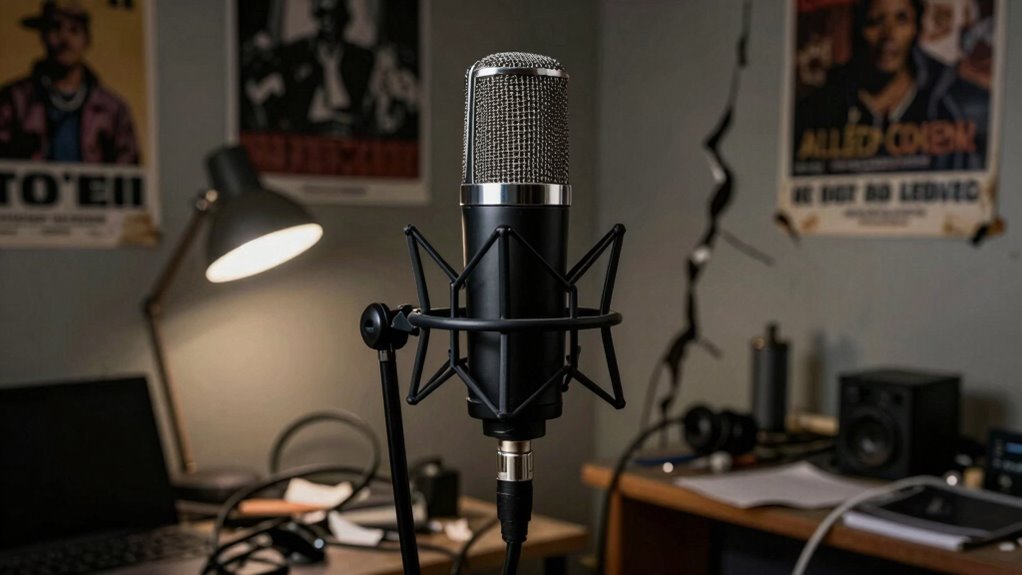
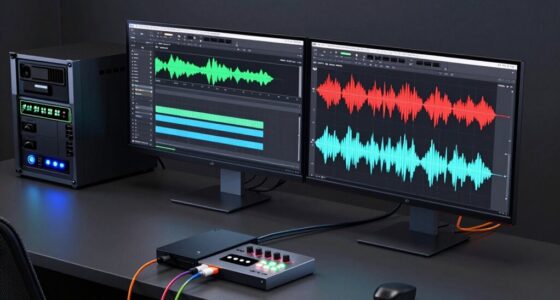
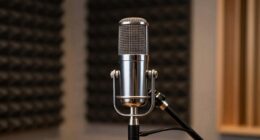
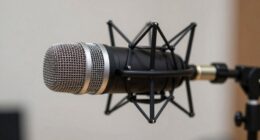
If you’re struggling with poor acoustics in a bad room, choosing the right microphone type can make a significant difference. The environment plays a crucial role in sound quality, and without proper acoustic treatment, recordings can sound dull, echoey, or cluttered. Selecting between a dynamic or condenser microphone isn’t just about preference; it’s about understanding how each responds to the room’s shortcomings. A condenser mic is known for capturing detailed sound with a wide frequency response, but it’s also more sensitive to ambient noise and room reflections. In a poorly treated space, this sensitivity can pick up unwanted echoes and background noise, making your recordings less clear. Conversely, a dynamic microphone is less sensitive and tends to reject ambient sounds, which can help improve sound quality in a noisy or echoey environment. This makes it a practical choice if you don’t have the resources or time for extensive acoustic treatment. Microphone selection is often influenced by the acoustic properties of the room, which underscores the importance of understanding room acoustics as part of your setup. Acoustic treatment is essential regardless of the microphone you choose, especially in a bad room. Adding bass traps, foam panels, or diffusers can significantly improve sound quality by reducing echo and controlling reflections. But if you’re limited on space or budget, your microphone choice becomes even more critical. A dynamic mic’s natural rejection of room noise means you’ll get cleaner recordings without needing to overhaul your environment. Additionally, understanding sound absorption can help you make more informed decisions about your setup. Proper soundproofing techniques can further reduce unwanted noise and reflections, making your recordings even clearer. It’s also helpful to consider microphone placement to optimize sound capture and minimize room issues. To further enhance your sound quality, experimenting with different room configurations can also have a positive impact on your recordings. In the end, your choice depends on your recording situation and what you prioritize. If you’re in a space with minimal acoustic treatment, a dynamic microphone will generally give you better results by minimizing the room’s flaws. If you can improve your environment, a condenser can showcase more nuance, but you’ll still benefit from some acoustic treatment to optimize sound quality. Remember, no microphone can fully compensate for a badly treated room, so consider both your equipment and your environment. When you understand how each microphone type interacts with your space, you can make smarter choices to get the best possible sound, even in less-than-ideal conditions.

FIFINE USB/XLR Dynamic Microphone for Podcast Recording, PC Computer Gaming Streaming Mic with RGB Light, Mute Button, Headphones Jack, Desktop Stand, Vocal Mic for Singing YouTube-AmpliGame AM8
[Natural Audio Clarity] Operated with frequency response of 50Hz-16KHz, the podcasting XLR mic delivers balanced audio range, likely…
As an affiliate, we earn on qualifying purchases.
As an affiliate, we earn on qualifying purchases.
Frequently Asked Questions
Which Microphone Type Is Better for Live Recordings?
For live recordings, a dynamic microphone is better because it handles high sound pressure levels and rejects background noise, making it ideal for less-than-ideal rooms. You’ll get clearer vocals and better studio recording quality despite room issues. Condenser mics excel in controlled environments, but in challenging spaces, a dynamic mic guarantees you capture vocal clarity without picking up unwanted sounds.
Do Dynamic or Condenser Mics Pick up More Background Noise?
Dynamic microphones usually dodge background noise like a ninja, giving you clearer vocals and less interference, perfect for messy rooms. Condensers, meanwhile, love to catch every tiny sound, making background interference a full-blown concert. So, if you want vocal clarity and to keep the chaos out of your recordings, go dynamic. For capturing every nuance, including unwanted noise, condensers are your guilty pleasure.
Are Condenser Mics More Fragile Than Dynamic Mics?
Condenser mics are more fragile than dynamic mics, especially in studio applications where vocal clarity is essential. You need to handle them carefully, as they’re sensitive to moisture, dust, and physical shocks. Dynamic mics are sturdier and better for rough environments. If you want crisp, clear vocals in a controlled studio setting, condensers excel, but if durability matters, dynamic mics keep your setup more secure.
Can I Use a Condenser Mic in a Noisy Environment?
Sure, you can use a condenser mic in a noisy environment, but don’t expect studio-quality sound. Its sensitivity makes it prone to picking up every cough and traffic jam, no matter the studio acoustics or microphone placement. If you love capturing every detail of a whisper in a tornado, go for it. Otherwise, consider a dynamic mic that’s better suited for battling the chaos of less-than-ideal recording environments.
Do I Need an External Power Source for Each Mic?
You don’t always need an external power source for every mic, especially with wireless models. Many wireless microphones operate on built-in batteries, so their battery life determines how long you can use them without recharging. Wireless connectivity allows you to move freely, but keep an eye on battery life to prevent interruptions. Some mics require external power, but most modern wireless options are designed for portability and convenience without extra power sources.

FIFINE Studio Condenser USB Microphone Computer PC Microphone Kit with Adjustable Boom Arm Stand Shock Mount for Instruments Voice Overs Recording Podcasting YouTube Vocal Gaming Streaming-T669
[USB Output] Enables simple setup. USB studio recording microphone kit provides a direct convenient plug-and-play connection to pc…
As an affiliate, we earn on qualifying purchases.
As an affiliate, we earn on qualifying purchases.
Conclusion
Ultimately, choosing between a dynamic or condenser microphone depends on your specific needs and environment. Don’t put all your eggs in one basket—consider your recording goals and room conditions carefully. Remember, it’s not just about the shiny gear but how well you use it. With the right mic and a bit of patience, you’ll find your sound. Sometimes, it’s about making the best of a bad situation and turning it into a winning one.

Focusound 52 Pack Acoustic Foam Panels 1" x 12" x 12" Sound Proof Foam Panles Soundproofing Noise Cancelling Wedge Panels for Home Office Recoding Studio with 300PCS Double-Side Adhesive
Soundproofing – Acoustic foam panels triangular grooves structure for better noise absorption, helps to reduce and absorb unwanted…
As an affiliate, we earn on qualifying purchases.
As an affiliate, we earn on qualifying purchases.

8 Pack – Bass Traps Acoustic Foam Corner, 8''x8''x12'' Black Bass Traps Corner Studio Foam, High Density and Fire-Proof Acoustic Panels Recording Studio Acoustical Treatments
Acoustic Principle- Bass Trap is a kind of sound absorbing structure specially used to absorb specific low-frequency standing…
As an affiliate, we earn on qualifying purchases.
As an affiliate, we earn on qualifying purchases.