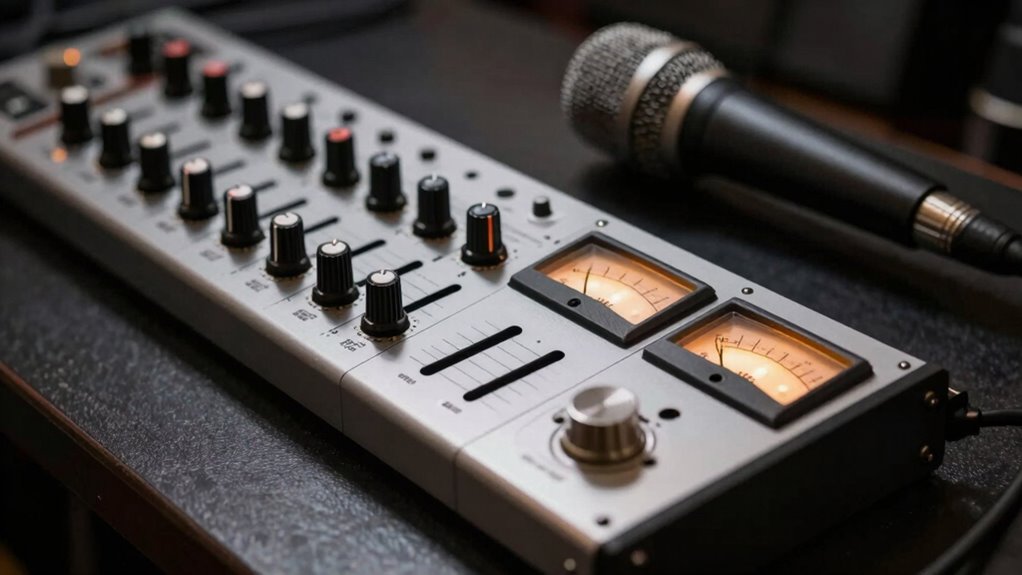

Choosing between a channel strip and a new microphone depends on your priorities. If you want to improve sound quality by refining tone and controlling dynamics, a channel strip is a smart upgrade. But if you seek a more natural, detailed capture of your source, a better microphone will make a bigger difference. Both options can elevate your recordings, so consider your goals carefully. Keep exploring to discover which upgrade suits your setup best.
Key Takeaways
- A channel strip enhances sound processing and tone shaping, improving overall quality without changing the source.
- A new microphone captures more natural detail and can significantly elevate core sound quality.
- Upgrading a microphone directly affects the source, often delivering a more profound sonic improvement.
- A channel strip offers real-time control and refinement, beneficial if existing mic quality is sufficient.
- The best upgrade depends on whether you need better source capture or improved processing and tone shaping.
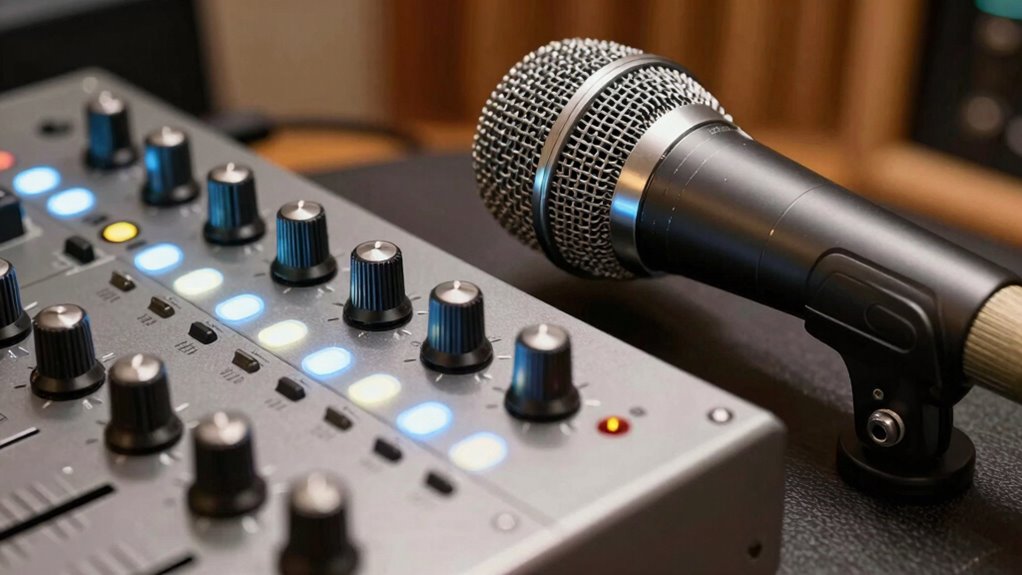
When you’re deciding between upgrading your recording gear, it’s important to understand the differences between a channel strip and a new microphone. Both can markedly impact your sound, but they do so in different ways. A channel strip is fundamentally an all-in-one signal processing unit, combining preamps, EQs, compressors, and often other effects. It’s designed to shape and refine the sound of your existing microphone or instrument before it hits your audio interface or recording device. On the other hand, a new microphone directly affects your sound quality from the source. Upgrading your mic can capture a more detailed, natural sound, especially if your current mic is outdated or incompatible with your setup.
Choosing between a channel strip and a new microphone depends on whether you want to refine your sound or capture more natural detail.
When weighing your options, consider what you’re looking to improve. If your recordings lack warmth, clarity, or have unwanted noise, a channel strip can help you fine-tune those issues. It allows you to shape the tone and dynamics of your sound in real-time, giving you more control over the final result. Plus, a good channel strip can enhance your equipment compatibility by integrating seamlessly with your existing gear, providing cleaner gain and better impedance matching. This can make a noticeable difference in sound quality, especially if your current setup involves older or lower-quality preamps. Additionally, a quality channel strip can help you achieve a professional sound even with modest equipment. Incorporating a professional-grade audio interface alongside your channel strip can further optimize your overall sound quality.
Choosing a new microphone, on the other hand, can create a more profound change in sound quality. High-quality mics capture more detail, have better frequency response, and produce a more natural tone, which can elevate your recordings considerably. If your current microphone is limiting your sound or not suited for your voice or instrument, upgrading it can be the most effective way to improve overall quality. Of course, compatibility matters here, too. You want to ensure the new microphone matches your recording environment and gear, especially regarding connectors, impedance, and polar patterns.
In the end, deciding whether a channel strip is a better upgrade than a new microphone depends on your specific needs. If your goal is to enhance your existing sound and refine your recordings with better tone shaping and equipment compatibility, a channel strip can be a smart investment. But if your recordings suffer from a lack of detail or natural sound, investing in a high-quality microphone might yield more noticeable results. Both options have their benefits, but understanding where your current setup falls short will help you make the best choice for your recording environment. Recognizing the audio signal chain and how each component influences your final sound can guide your decision effectively.
professional channel strip audio processor
As an affiliate, we earn on qualifying purchases.
As an affiliate, we earn on qualifying purchases.
Frequently Asked Questions
Can a Channel Strip Improve Vocal Recordings Without a New Mic?
Yes, a channel strip can improve your vocal recordings without a new mic. It enhances vocal clarity by providing better control over EQ and compression, shaping your sound more precisely. Additionally, it helps with noise reduction, minimizing unwanted background sounds. With a channel strip, you can achieve a cleaner, more professional vocal tone, making your recordings sound warmer and more polished, even if your microphone remains the same.
Is a Channel Strip More Cost-Effective Than Purchasing a High-End Microphone?
A channel strip is generally more cost-effective than buying a high-end microphone, especially considering microphone compatibility and your budget considerations. It enhances your existing gear by improving sound quality with EQ, compression, and preamp features. If you’re on a tight budget, upgrading with a channel strip gives you better control and tone without the hefty price tag of a top-tier microphone, making it a smart investment for professional-sounding recordings.
Will a Channel Strip Suit All Types of Microphones?
A channel strip may not suit all types of microphones due to microphone compatibility issues. Its versatility depends on the specific model and your recording needs. While it can improve sound quality for many mics, some might require different preamp or EQ settings. You should evaluate your microphone’s specifications and intended use to determine if a channel strip will enhance your setup effectively, rather than assuming universal compatibility.
How Does a Channel Strip Affect Recording Latency?
A channel strip can add a slight increase in recording latency due to hardware compatibility and signal processing. However, modern units are designed to minimize this delay, ensuring smooth recording. You might notice a tiny lag, but it’s usually negligible with quality gear. The benefits of improved sound shaping and clarity often outweigh any minimal latency increase, making a channel strip a valuable upgrade for professional recordings.
Can a Channel Strip Replace the Need for a New Microphone Upgrade?
A channel strip can sometimes replace the need for a new microphone upgrade by enhancing your current setup. It improves microphone compatibility and offers advanced signal processing, which can markedly boost your sound quality. While it doesn’t change the mic itself, a good channel strip can clarify and shape your recordings, making it a cost-effective way to upgrade your overall audio without immediately investing in a new mic.
high quality condenser microphone for vocals
As an affiliate, we earn on qualifying purchases.
As an affiliate, we earn on qualifying purchases.
Conclusion
Ultimately, upgrading to a channel strip can be like giving your sound a magic wand, transforming your recordings in ways a new mic alone can’t match. It’s a powerful investment that might seem small but can unleash a universe of professional tone and clarity. While a new microphone is exciting, a good channel strip can turn your existing gear into a powerhouse, making your setup feel like it’s been hit by a sonic hurricane—completely leveling up your sound!
audio interface with built-in preamp and EQ
As an affiliate, we earn on qualifying purchases.
As an affiliate, we earn on qualifying purchases.
studio-grade microphone for recording
As an affiliate, we earn on qualifying purchases.
As an affiliate, we earn on qualifying purchases.