
TL;DR

Get everyday helpers delivered free — and shop member deals
- Fast, free delivery on millions of items
- Access to Prime Big Deal Days deals on October 6–7
- Prime Video, Amazon Music and more included
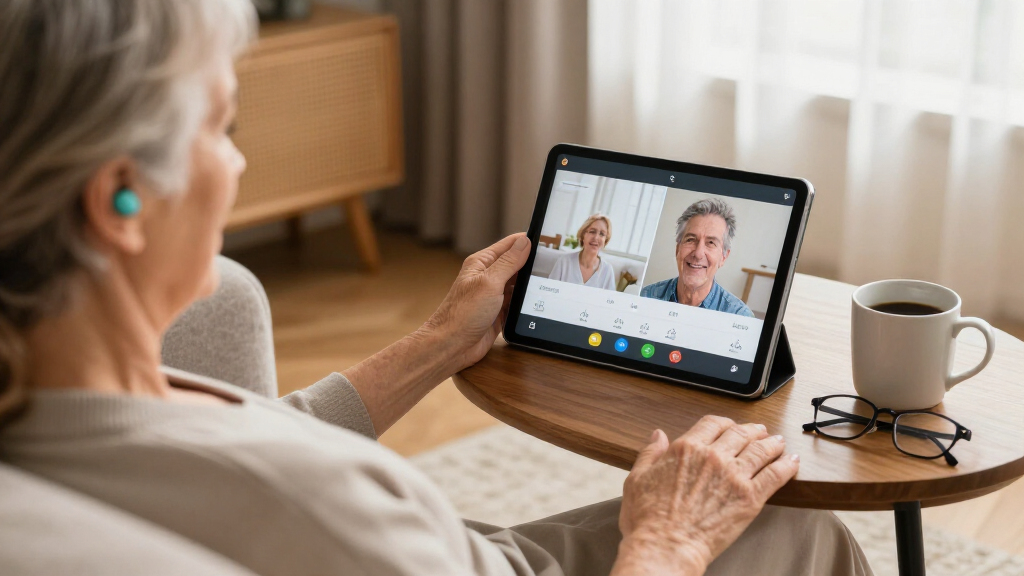
A study combining four aging cohorts found that older adults’ computer use was associated with higher cognitive scores, while longer television viewing was associated with lower scores. Genetic analyses offered some evidence linking TV viewing with lower cognitive performance, but did not establish that screen habits cause cognitive change or dementia.
A study of 8,996 older adults found that computer use was associated with higher cognitive scores, while television viewing was associated with lower scores, suggesting that screen activity type may matter alongside time spent. The research, published in npj Digital Medicine, also used genetic analyses to examine potential causal links, but those results do not show that changing screen habits prevents cognitive decline or dementia.
Researchers combined data from four aging cohorts: the Survey of Health, Aging, and Retirement in Europe, the English Longitudinal Study of Aging’s Harmonized Cognitive Assessment Protocol, the Health and Retirement Study’s corresponding assessment, and the National Health and Nutrition Examination Survey. Participants’ mean ages across cohorts ranged from 69.2 to 76.2 years. The observational analyses compared reported TV viewing and computer use with measures including recall, processing speed or orientation, animal fluency, and an overall cognition score.
Across the cohorts, TV viewing was associated with poorer global cognition, while computer use was associated with higher scores. The computer-use association was strongest at two to three hours daily in three cohorts and up to one hour in the European cohort; estimates weakened at four or more hours. These are observational associations, not evidence that computer use itself improved cognition. Results for specific cognitive skills varied, though TV viewing was most consistently associated with immediate recall and computer use with processing speed or orientation and delayed recall.
The researchers also applied Mendelian randomization, a method using genetic variants to investigate possible causal relationships. They reported links between genetically predicted TV viewing and lower cognitive performance. However, computer-use time was not significantly associated with one separate overall cognitive-function measure. Some brain-imaging associations appeared in the analyses, but many did not remain statistically significant after correction for multiple comparisons. The study found no convincing evidence that genetically predicted screen use was associated with the reported dementia subtypes.
Screen Habits and Cognitive Scores
The findings complicate the idea that screen time should be treated as a single exposure. Watching television and using a computer showed different patterns in the cohort data, so the activity may be relevant when researchers examine relationships between digital media and cognition in later life. That distinction may also help readers understand why a simple total-hours measure can miss differences in how people use screens.
The results do not support a prescription to increase computer use or reduce TV viewing as a way to protect the brain. People who use computers may differ from those who do not in education, income, health, activity levels, and other factors related to cognitive scores. The study itself found that non-use of computers and prolonged TV viewing tended to occur alongside older age, physical inactivity, chronic disease, lower cognitive scores, and lower socioeconomic status. Those overlapping factors make cause and effect difficult to separate.
The public-health relevance is substantial because dementia is a major concern as populations age. The report cites projections that global dementia prevalence could reach 152 million by 2050. But this study does not show that screen behavior changes that trajectory. Its contribution is narrower: it compares types of screen use across multiple cohorts and tests whether genetic evidence supports a causal interpretation.
large button desktop computer for seniors
As an affiliate, we earn on qualifying purchases.
As an affiliate, we earn on qualifying purchases.
How Researchers Compared Screen Use
The study paired conventional observational analyses with genetic causal-inference analyses. In the cohort portion, multivariable-adjusted models compared reported TV and computer-use time with cognitive scores. This approach can account for measured characteristics, but it cannot rule out all confounding or establish whether screen habits preceded differences in cognition.
For the second part, researchers used genetic summary statistics to examine screen-use measures alongside cognitive outcomes, dementia subtypes, and brain features such as regional volume, cortical surface area and thickness, and resting-state functional connectivity. They also explored whether brain-imaging measures might mediate associations. Most reported imaging signals were tentative: nominal findings for cortical measures and connectivity did not survive multiple-testing correction, while a TV-viewing association with lower left insula volume did. The authors considered Alzheimer’s, frontotemporal, Lewy body, and vascular dementia.
easy-to-use tablet for older adults
As an affiliate, we earn on qualifying purchases.
As an affiliate, we earn on qualifying purchases.
Causation and Dementia Risks
The study does not establish why computer use and TV viewing tracked with different cognitive scores. The observational results may reflect other differences between participants, and genetic analyses rely on assumptions about how genetic variants relate to the exposures and outcomes. The reported findings do not establish that a particular number of hours at a screen causes better or worse cognition.
It also remains unclear whether the associations apply equally across different kinds of computer activity, television content, or patterns of use. The source describes time spent on each screen category, but does not provide enough detail here to distinguish activities such as communication, games, work, or passive viewing. The researchers found no convincing genetic evidence linking screen use to dementia subtypes; that is not proof that no relationship exists. The study also does not show whether changing screen habits would alter cognitive outcomes over time.
voice-controlled smart home devices for seniors
As an affiliate, we earn on qualifying purchases.
As an affiliate, we earn on qualifying purchases.
Questions for Future Screen Studies
Further research would need to follow screen habits and cognition over time, measure what people actually do on devices, and better account for health, social, and economic differences. Studies testing whether particular forms of digital activity affect cognitive outcomes would be needed before drawing conclusions about interventions.
For now, the reported findings are best read as evidence of differing associations, not practical guidance for older adults or caregivers. The next useful step is clarification through replication and research that can distinguish screen activity from the circumstances and behaviors that accompany it.
digital cognitive training games for elderly
As an affiliate, we earn on qualifying purchases.
As an affiliate, we earn on qualifying purchases.
Key Questions
What did the study find about computer use and cognition?
Across four cohorts, computer use was associated with higher cognitive scores. The association varied by cohort and reported duration, and it does not prove that computer use caused better cognition.
Was television viewing linked to cognitive scores?
TV viewing was associated with poorer global cognition in the observational analyses. Genetic analyses also linked predicted TV viewing with lower cognitive performance, but they do not establish that watching TV causes cognitive decline.
Did the research show that screen time causes dementia?
No. The researchers reported no convincing evidence that genetically predicted TV viewing or computer use was associated with the dementia subtypes they examined.
Does the study recommend a screen-time limit?
No specific limit follows from these findings. The study examined associations and possible causal links; it did not test whether reducing TV viewing or increasing computer use changes cognitive health.
Source: rss
Fall Picks
fall essentials
As an affiliate, we earn on qualifying purchases.