TL;DR

Get everyday helpers delivered free with Prime
- Fast, free delivery on millions of items
- Prime Video, Amazon Music and more included
- Member-only deals all year
University of Prince Edward Island researcher Jay Penney is using human stem-cell-derived microglia and neurons to study a rare RAB32 variant linked to higher Parkinson’s risk. The Parkinson Canada-funded project is one year into a three-year grant, and researchers have not yet established how the variant affects brain cells or whether the work will lead to a treatment.
Jay Penney’s team at the University of Prince Edward Island is using human stem-cell-derived microglia and neurons to investigate how a rare variant of the RAB32 gene may contribute to Parkinson’s disease. The Parkinson Canada-funded project is examining the variant in brain-cell models; its effects and any treatment implications remain under study.
Penney, an associate professor at the university, began focusing on RAB32 after researchers identified a rare variant associated with increased Parkinson’s risk. Being Patient’s report describes the estimated risk increase as 13 to 65 times, while its opening summary says carrying one copy may mean as much as a 65-fold increase. The figures are presented as risk estimates, not a prediction that a particular carrier will develop the disease; the report does not specify the populations or comparison baseline for the range.
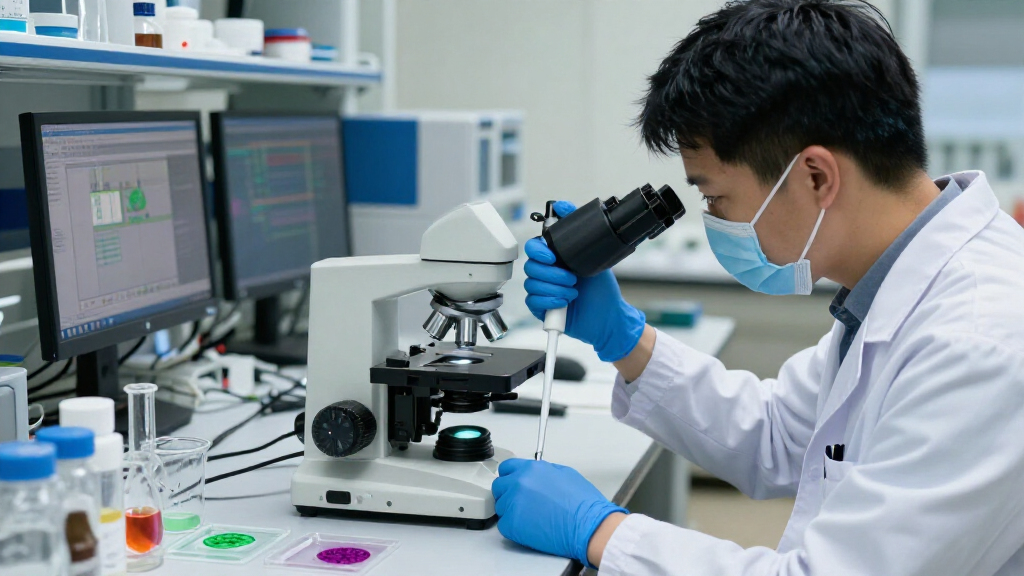
Penney’s lab is genetically modifying human microglia and neurons grown from stem cells so researchers can observe what happens when the cells carry the variant. Microglia are immune cells in the brain. Penney told Being Patient that RAB32 is frequently active in those cells, but its role in the brain is poorly understood. The team is examining how the gene interacts with other proteins and is also looking for effects on other cellular pathways.
RAB32 encodes a protein that helps regulate other proteins. The report says the Parkinson’s-linked variant may alter the protein’s shape and make it overactive, but that is a hypothesis being tested, not an established finding. RAB32 may interact with proteins including LRRK2, which is implicated in Parkinson’s, as well as PKA and ERK, which take part in regulating many cellular processes.
How Cell Models Could Guide Parkinson’s Research
The project targets a possible biological mechanism behind Parkinson’s rather than testing a treatment in patients. If researchers determine how the variant changes the behavior of brain cells, the work could point to processes that are open to further study and, potentially, intervention. For people carrying a rare variant, understanding its effects may help clarify how genetic risk connects to disease biology.
Penney told Being Patient that working in human cells could make it easier to investigate whether potential treatments reverse effects observed in the models. That does not establish that a candidate treatment will work in people. The current study is at an early stage, and the source reports no confirmed treatment result or clinical trial arising from it.
Popular right now

Breville BES870XL Barista Express Espresso Machine, Brushed Stainless Steel

Ninja Luxe Café Mini Plus Espresso and Drip Coffee Machine with AutoFroth, Stainless Steel (ES351)

Bose QuietComfort True Wireless Earbuds with Active Noise Cancellation, Black
As an affiliate, we earn on qualifying purchases.
Why Researchers Are Studying Rare Variants
Rare genetic variants can give researchers a way to investigate disease processes that may affect a small number of people. The Being Patient report compares this approach with research on a rare Alzheimer’s-linked mutation known as the Arctic mutation. It says research into that mutation helped identify a form of beta-amyloid associated with disease and contributed to the development of lecanemab, marketed as Leqembi. That history is an example of how genetic research can inform treatment development, not evidence that the RAB32 project will produce a similar outcome.
Penney’s team is one year into a three-year grant from Parkinson Canada. The report says the project is intended to investigate RAB32 in human brain-cell models, in a gene that has mostly been studied in other types of cells. The researchers are therefore exploring whether its effects in microglia and neurons include brain-specific pathways not yet well understood.
““There’s very very little known about what it might be doing in the brain.””
— Jay Penney, associate professor at the University of Prince Edward Island, speaking to Being Patient
What Researchers Have Yet to Establish
The team has not yet established what RAB32 does in human microglia or neurons, or whether the variant makes its protein overactive in those cells. The proposed effects on other proteins and cellular pathways remain subjects of investigation. The report provides no results showing that the lab has identified a disease mechanism or a treatment candidate.
The source also does not provide details about the number of cell lines or experiments, the precise genetic variant, or how the reported risk range was calculated. The association with increased risk should not be read as certainty that a person carrying the variant will develop Parkinson’s. Whether observations in lab-grown cells will translate to patients is also unknown.
The Next Two Years of Study
Penney’s team is expected to continue examining how RAB32 affects the modified human cells during the remaining period of its three-year grant. According to the report, promising findings could support further research and applications for additional funding. The immediate next step is to understand the mutation’s effects in the cell models; the report does not give a specific date for results or name a planned clinical trial.
Key Questions
What is the RAB32 variant being studied?
It is a rare genetic variant associated with increased Parkinson’s risk. The report gives a risk estimate ranging from 13 to 65 times but does not specify the comparison baseline or population behind that range.
What cells is Penney’s team studying?
The researchers are using human stem-cell-derived microglia and neurons that have been genetically modified to carry the variant. They are observing how the gene affects these cells.
Has the team found a treatment?
No treatment result is reported. The project is investigating the variant’s effects in cell models; any possible treatment would require further research and testing.
How far along is the research?
The team is one year into a three-year Parkinson Canada grant, according to the Being Patient report. It describes the work as early-stage.
Source: beingpatient.com