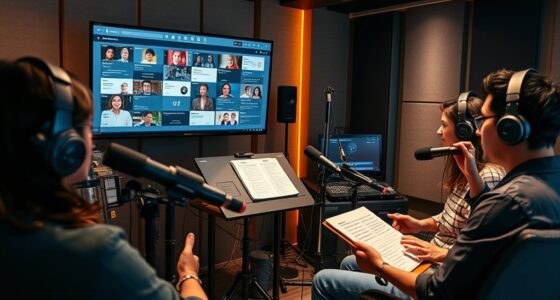

To guarantee quality in multi-language productions, focus on accurate translation, cultural adaptation, and thorough review processes. Collaborate with skilled translators familiar with the target audience’s context, use style guides, and involve native speakers or cultural experts. Implement multiple rounds of editing and quality checks, and monitor audience feedback after release. Maintaining consistency and respecting cultural nuances are key. Keep exploring these strategies further to master effective quality control in multilingual content.
Key Takeaways
- Implement multiple review stages involving native speakers and cultural experts to ensure translation accuracy and cultural appropriateness.
- Use style guides and glossaries to maintain consistency and brand voice across all languages.
- Utilize automated tools alongside human proofreading for comprehensive quality assurance.
- Monitor audience feedback post-release to identify and address misunderstandings or cultural issues.
- Continuously update and refine translations and adaptations based on feedback and evolving cultural contexts.

Producing content in multiple languages presents unique challenges, making effective quality control indispensable. When managing multi-language productions, your primary goal is to ensure that the message remains clear and impactful across diverse audiences. This involves paying close attention to translation accuracy, which is critical in preserving the original intent and tone of your content. A mistranslation or a subtle nuance lost in translation can lead to misunderstandings or even offend your target audience. To avoid this, you must work with skilled translators who understand both the source and target languages thoroughly. They should be familiar with industry-specific terminology and cultural nuances to ensure precision in every translation.
Ensuring translation accuracy is vital for clear, impactful multi-language content.
Beyond just translating words accurately, you need to focus on cultural adaptation. Language isn’t just about vocabulary; it’s deeply rooted in cultural context. Cultural adaptation involves modifying your content so it resonates with local customs, beliefs, and social norms. This step prevents misinterpretations and makes your message more relatable and engaging. For instance, idioms, humor, or references that work well in one culture might fall flat or cause confusion elsewhere. Your quality control process should include reviews by native speakers or cultural consultants who can identify and rectify these issues, ensuring that your content feels natural and appropriate in each language.
Implementing a rigorous review process is key to maintaining high standards. This includes multiple rounds of editing and proofreading by professionals familiar with the target culture. Automated tools can assist, but they shouldn’t replace human oversight, especially when it comes to cultural sensitivity and context. Consistency is also crucial; your brand voice and messaging must be uniform across all languages. Developing style guides and glossaries helps keep terminology and tone aligned, reducing discrepancies that could dilute your brand identity.
Another essential aspect of quality control is feedback collection. After releasing content in different languages, monitor how your audience interacts with it. Are there recurring misunderstandings or negative reactions? Use this feedback to refine your translations and cultural adaptations continuously. Incorporate iterative improvements into your workflow to ensure your content evolves and becomes more refined over time. Additionally, implementing accurate translation practices helps maintain the integrity of your message across diverse languages.
Ultimately, successful multi-language content hinges on meticulous attention to translation accuracy and cultural adaptation. By integrating these elements into your quality control process, you’ll produce content that feels authentic, respectful, and engaging regardless of the language. This not only boosts your credibility but also deepens your connection with diverse audiences. Remember, quality control isn’t a one-time effort; it’s a continuous process that demands vigilance, expertise, and a genuine understanding of the cultures you’re communicating with.
Top picks for "quality control multi"
Open Amazon search results for this keyword.
As an affiliate, we earn on qualifying purchases.
Frequently Asked Questions
How Do Cultural Nuances Impact Quality Standards?
Cultural nuances greatly impact quality standards because you need to guarantee cultural sensitivity and respect language diversity. When you understand local customs, idioms, and values, you can tailor content that resonates authentically with each audience. Ignoring these nuances risks miscommunication or offending viewers. So, you should adapt scripts, visuals, and messaging to reflect cultural differences, maintaining high quality and ensuring your content is respectful, relevant, and engaging across diverse cultures.
What Are the Costs Associated With Multi-Language Quality Control?
You’ll face costs like translation, hiring specialized reviewers, and implementing quality management systems. To handle these expenses, focus on cost management strategies, such as prioritizing key languages and streamlining processes. Proper resource allocation ensures you use your budget effectively, avoiding unnecessary spending. Anticipate expenses early and plan accordingly to balance quality with cost efficiency, ensuring your multi-language production meets standards without overspending.
How Is Technology Integrated Into Multi-Language QC Processes?
Think of technology as your trusted compass guiding you through the maze of translation accuracy. You integrate automation tools that streamline workflows, flag inconsistencies, and guarantee consistency across languages. These tools act like vigilant sentinels, catching errors early and freeing you to focus on fine-tuning nuances. By harnessing advanced software, you enhance precision and efficiency, transforming a complex process into a harmonious symphony of accurate, multi-language quality control.
What Training Is Required for QC Teams Across Languages?
You need to guarantee your QC teams meet training standards that promote skill development across languages. This involves providing thorough training in linguistic nuances, cultural context, and technical tools specific to each language. Regular workshops and updates help your team stay current with evolving quality benchmarks. By emphasizing skill development, you empower your team to identify and correct issues effectively, maintaining high quality standards throughout multi-language productions.
How Do Time Zones Affect Multi-Language QC Workflows?
Time zones can challenge your multi-language QC workflows by disrupting coordination and delaying reviews. To keep everything on track, you need effective workflow synchronization across time zones, using shared schedules and real-time communication tools. By planning overlapping work hours and setting clear deadlines, you ensure that QC tasks stay aligned, so your team works efficiently regardless of geographic differences, ultimately maintaining quality and meeting project timelines.
Conclusion
You might think managing quality control across multiple languages is too complicated or time-consuming. But with the right processes and clear communication, you can streamline the entire process. Don’t let language barriers hold you back; instead, embrace these strategies to guarantee your content remains accurate and consistent. When you prioritize thorough quality checks, you’ll deliver professional, polished productions that resonate globally—no matter how many languages you’re working with.