
TL;DR

Get everyday helpers delivered free with Prime
- Fast, free delivery on millions of items
- Prime Video, Amazon Music and more included
- Member-only deals all year
A psychiatry roundup published October 21, 2026, highlighted a sham-controlled pilot trial in which one 10-minute transcranial ultrasound session was linked to a modest reduction in delusion scores among people with schizophrenia. It also summarized research identifying a circadian pattern in some severe, recurrent depression and reporting on eating-disorder risks and limited safeguards amid wider GLP-1 use. The findings have different levels of evidence and do not establish that ultrasound or GLP-1 drugs are treatments for these conditions.
A psychiatry news roundup published October 21 reported a modest, statistically significant drop in delusion scores after a single 10-minute transcranial ultrasound session in a sham-controlled pilot trial involving people with schizophrenia. The roundup also highlighted research describing a circadian subtype of depression and concerns about limited eating-disorder safeguards as GLP-1 drugs become more widely used.
The ultrasound finding came from a pilot trial reported in npj Acoustics. Participants received one 10-minute session, and researchers compared the intervention with a sham procedure. The trial report, as summarized by MedPage Today, described the reduction in delusion scores as both modest and significant. The roundup did not provide the number of participants, the length of follow-up, or details about how long any change lasted.
A cross-sectional study in the British Journal of Psychiatry found that roughly one-quarter of adults with severe, recurrent depressive disorders had what researchers termed a circadian subtype. It was characterized by disruption to 24-hour sleep-wake cycles. Because the study was cross-sectional, it describes a pattern in the people assessed; it does not establish what caused the pattern or whether it predicts a response to a particular treatment.
The roundup also cited a New York Times report that few safeguards are in place for people with eating disorders amid the expansion of GLP-1 drug use. Separately, the CDC’s 2025 Youth Risk Behavior Survey found that 40.5% of high school students reported binge eating on at least one day in the previous 30 days, while 17.2% reported it on three or more days. Those survey figures describe students’ reported behavior; they do not show that GLP-1 use caused eating disorders or binge eating.
What the Findings Could Mean for Care
The ultrasound result is an early signal about a possible way to affect delusion symptoms, but a pilot trial cannot establish how well the approach works across a broader population or whether any benefit lasts. The sham-controlled design offers a comparison beyond simply observing change after treatment, yet the reported modest effect and missing details in the roundup limit what readers can conclude. It is not evidence that ultrasound is an established schizophrenia treatment.
The depression research may help investigators examine whether sleep-wake disruption identifies a subgroup within severe, recurrent depression. The reported prevalence does not establish a separate diagnosis or show that changing sleep patterns would improve depression. Meanwhile, the eating-disorder reporting points to a practical concern: as GLP-1 use grows, patients and clinicians may face questions about screening, monitoring and how treatment interacts with disordered eating. The supplied material does not establish a specific risk caused by the drugs.
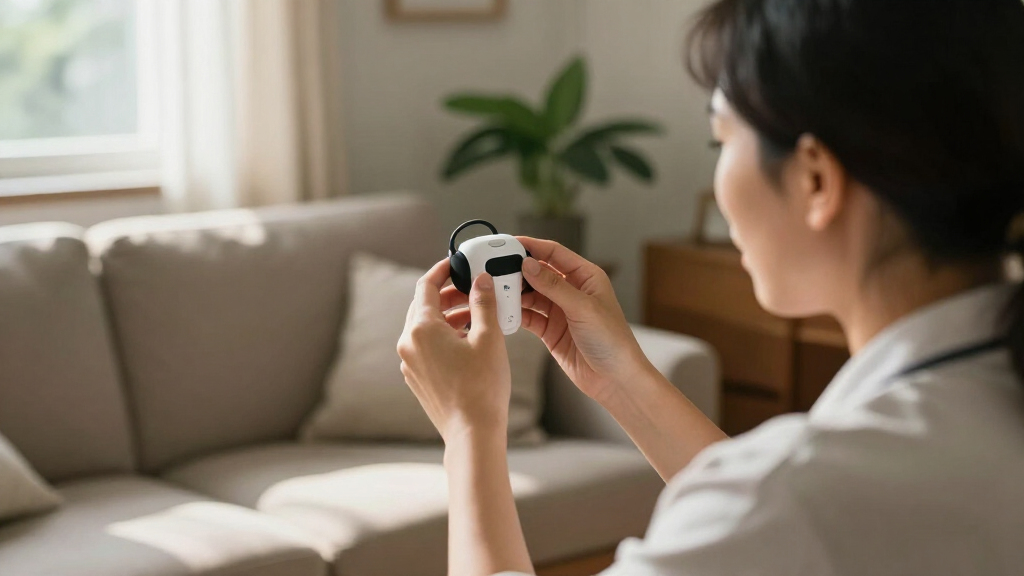
transcranial ultrasound device for mental health
As an affiliate, we earn on qualifying purchases.
As an affiliate, we earn on qualifying purchases.
Three Different Lines of Psychiatry Research
The items appeared together in MedPage Today’s October 21 psychiatry roundup, which also summarized developments in youth mental health and other areas. The three topics featured here have distinct evidence bases: an intervention pilot trial, a cross-sectional study of depressive symptoms and sleep-wake cycles, and reporting on patient safeguards around GLP-1 use. They should not be treated as one study or as evidence for a single shared conclusion.
The roundup’s CDC figures provide a wider picture of reported youth concerns: it said one-third of high school students reported persistent sadness or hopelessness, with higher prevalence among females. Those statistics come from the 2025 Youth Risk Behavior Survey. They are separate from the ultrasound and depression studies, and they do not establish why students experienced those feelings or eating behaviors.
“A single, 10-minute transcranial ultrasound session led to a modest but significant drop in delusion scores among people with schizophrenia in a sham-controlled pilot trial.”
— MedPage Today, summarizing the npj Acoustics pilot trial
As an affiliate, we earn on qualifying purchases.
Evidence Gaps and Patient Protections
The roundup does not give key details of the ultrasound trial, including its sample size, participant characteristics, exact score change, follow-up period or adverse-event findings. It is therefore unclear how durable the change was, whether it was clinically meaningful for patients, or how the approach would perform in larger trials. The result should be read as preliminary evidence, not proof of established benefit.
For the circadian depression finding, the summary does not provide the study’s sample size, the method used to identify the subtype, or whether participants’ sleep patterns were measured over time. The cross-sectional design cannot establish cause and effect. For GLP-1s, the roundup does not identify particular safeguards or offer evidence that the drugs cause, worsen or treat eating disorders. The CDC survey reports student behaviors over a defined period and does not measure GLP-1 exposure.
As an affiliate, we earn on qualifying purchases.
What Researchers and Clinicians Need
The next evidence needed for ultrasound is replication in larger, well-described trials, with longer follow-up and reporting on symptom changes, patient functioning and safety. Until those results are available, the pilot finding does not support treating the technique as routine care. Research on circadian-pattern depression would benefit from clearer definitions and follow-up that tests whether the observed sleep-wake pattern is stable and how it relates to outcomes.
On GLP-1s and eating disorders, the source material identifies concern about limited safeguards but does not report a specific policy change or next regulatory step. Further reporting and research would need to clarify what screening or monitoring is available, which patients may need additional support, and what evidence exists about outcomes. The roundup provides no announced timetable for those developments.
As an affiliate, we earn on qualifying purchases.
Key Questions
Does the ultrasound trial show that ultrasound treats schizophrenia?
No. The roundup describes a sham-controlled pilot trial with a modest reduction in delusion scores after one session. It does not establish long-term benefit or show that ultrasound is an approved or routine treatment.
What does “circadian subtype” mean in this report?
It refers to a pattern of severe, recurrent depression associated in the study with disrupted 24-hour sleep-wake cycles. The cross-sectional finding does not establish the cause of that pattern or define a treatment.
Did the CDC survey link GLP-1 drugs to binge eating?
No such link is reported. The CDC figures describe students’ self-reported binge eating during the 30 days before the survey. The roundup separately cites reporting about limited safeguards for people with eating disorders amid broader GLP-1 use.
What remains unknown about GLP-1s and eating disorders?
The supplied material does not specify which safeguards are lacking or establish whether GLP-1 drugs cause, worsen or improve eating disorders. Those questions require evidence beyond the roundup’s brief summary.
Source: rss
Fall Picks
fall essentials
As an affiliate, we earn on qualifying purchases.