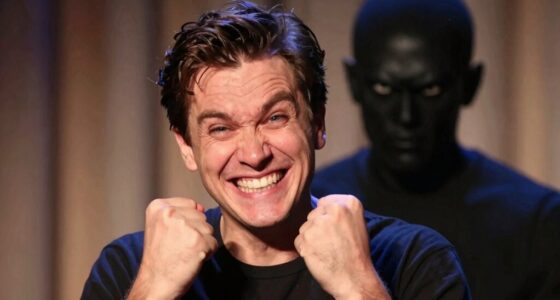
Silent characters use their breath and physical effort to communicate deep emotions without words. Rapid, shallow breaths show anxiety or fear, while slow, steady breathing suggests calm or resignation. Subtle gestures, like clenched jaws or tense shoulders, reveal internal struggles. Every movement is carefully crafted to express vulnerability, resolve, or despair, creating a powerful nonverbal dialogue. Watching these cues allows you to understand their inner worlds more profoundly—if you keep paying attention, you’ll discover even more layers beneath the silence.

Get everyday helpers delivered free with Prime
- Fast, free delivery on millions of items
- Prime Video, Amazon Music and more included
- Member-only deals all year
Key Takeaways
- Silent characters use breath patterns and body language to convey emotions like anxiety, calmness, or despair without spoken words.
- Rapid, shallow breathing signals distress, while steady breaths indicate calm or resignation, providing emotional cues to viewers.
- Physical effort, such as clenched jaws or tense shoulders, enhances expressions of internal struggle or vulnerability.
- Precise, authentic gestures communicate complex feelings, creating an intimate connection with the audience without dialogue.
- Visual cues like effort and breath work transcend language barriers, allowing universal understanding of a character’s emotional state.

Silent Characters
Have you ever noticed how some characters in stories or films communicate without words, yet their presence speaks volumes? These mute characters rely on more than just their actions; they use subtle cues like breath, effort, and body language to convey meaning. This form of communication, often referred to as gestural communication, becomes a powerful tool for emotional expression. When words fall silent, every breath, every movement, takes on heightened significance, revealing inner feelings that words might hide.
Imagine watching a character’s chest rise and fall rapidly during a moment of tension. That quick, shallow breathing isn’t just physical—it’s an emotional signal, hinting at anxiety or fear. Conversely, slow, steady breaths can indicate calmness or resignation. Such gestural cues allow you to feel what the character is experiencing without explicit dialogue. You sense their emotional state through their breath, noticing how effort manifests in their posture, facial tension, or even in the tightness of their fists. These nonverbal signals become a language of their own, a nuanced dialogue that speaks directly to your subconscious.
Rapid breaths reveal anxiety; steady breaths suggest calm—nonverbal cues speak volumes beyond words.
Effort, in this context, isn’t just physical exertion; it’s emotional labor. A character pushing through pain or frustration might clench their jaw, tighten their shoulders, or breathe heavily, each gesture adding layers to their emotional expression. These gestures often go unnoticed if you’re not paying close attention, but they’re essential in understanding the unspoken depths of a character’s mind. Their silent struggle becomes palpable through their gestures, creating an intimate connection between you and their inner world.
Silent characters master the art of expressing complex emotions through these subtle cues. Their gestures aren’t exaggerated but precise, crafted to communicate vulnerability, resolve, or despair without uttering a single word. When they lift a hand in hesitation or bow their head in defeat, you understand volumes about their internal conflict. Their body language, their breath, and their efforts become a silent language of emotion—one that resonates deeply because it feels authentic and raw.
Furthermore, the use of visual cues enhances the storytelling, allowing audiences to interpret emotions without reliance on dialogue. In these moments, you realize that gesture and effort can be more powerful than speech. They cut through language barriers, allowing genuine emotional expression to shine through. As a viewer or reader, you’re invited into a world where silence isn’t empty but full of meaning. You learn to read the unspoken, to understand the language that exists beyond words, making silent characters some of the most compelling and emotionally resonant figures in storytelling.
As an affiliate, we earn on qualifying purchases.
Frequently Asked Questions
How Can Breath Control Improve Physical Performance?
Breath control can markedly boost your physical performance by enabling you to stay focused and maintain stamina. When you practice mindful breathing and diaphragmatic control, you optimize oxygen intake and reduce fatigue. This helps you stay relaxed under pressure, improves endurance, and enhances overall strength. By mastering these techniques, you can perform more efficiently, recover faster, and push your limits with greater confidence and control.
What Are Common Breathing Techniques in Acting?
Imagine your voice as a river, flowing smoothly through your words. You’ll want to master breathing techniques like diaphragmatic breathing to keep that flow steady, giving you control over voice modulation. In acting, common techniques include sustained breaths for emotional depth and quick, controlled inhales for urgency. These methods help you harness your breath, transforming silent effort into powerful, expressive performance that captivates your audience effortlessly.
How Does Breath Impact Emotional Expression?
Your breath directly impacts emotional expression by enhancing vocal projection and emotional resonance. When you control your breath, you can convey intensity, vulnerability, or calmness effectively. Deep, steady breathing helps you sound more confident and authentic, making your emotions resonate with the audience. By focusing on your breath, you amplify your character’s feelings, allowing your performance to feel more genuine and powerful.
Can Breathwork Reduce Performance Anxiety?
Yes, breathwork can reduce performance anxiety. By practicing mindfulness meditation and diaphragmatic breathing, you activate your parasympathetic nervous system, calming your mind and body. Regularly focusing on slow, deep breaths helps you manage stress and stay present, making it easier to handle pressure. Incorporate these techniques into your routine before performances to foster relaxation and boost your confidence, ultimately improving your overall performance.
What Equipment Aids in Breath Training?
You can enhance your breath training with equipment like breath sensors and respiratory trainers. Breath sensors monitor your breathing patterns in real-time, helping you identify areas for improvement. Respiratory trainers provide resistance during inhalation or exhalation, strengthening your respiratory muscles. Using these tools regularly boosts your breath control, reduces anxiety, and improves overall performance. Incorporate them into your routine to make your breathwork more effective and tailored to your needs.
nonverbal communication coaching kit
As an affiliate, we earn on qualifying purchases.
As an affiliate, we earn on qualifying purchases.
Conclusion
You might think silence means absence or weakness, but it’s actually a powerful form of expression. When you use breath and effort thoughtfully, your silence can speak volumes beyond words. Don’t worry about feeling unheard—your quiet strength can convey emotion and intent just as clearly. Embrace these silent characters, and you’ll discover a new depth in your communication. Sometimes, the most profound messages are delivered without a single sound—trust in that power.
As an affiliate, we earn on qualifying purchases.
emotional awareness body language tools
As an affiliate, we earn on qualifying purchases.
As an affiliate, we earn on qualifying purchases.
Halloween Picks
halloween
As an affiliate, we earn on qualifying purchases.