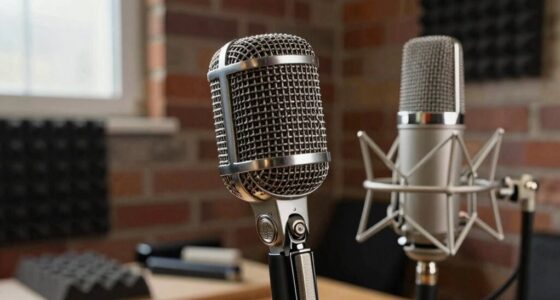
To choose an XLR microphone without wasting money, consider your recording environment and what you’ll use it for. Match the polar pattern to reduce background noise in noisy spaces, and guarantee the frequency response suits your sound source for clarity. Prioritize features that meet your needs and stay within your budget. Avoid overspending on unnecessary options and focus on a microphone that delivers what’s essential for your setup. If you explore further, you’ll find tips to fine-tune your choice even more.
Key Takeaways
- Match the microphone’s polar pattern to your recording environment to reduce background noise and improve clarity.
- Choose a frequency response range suited for your specific sound sources, like vocals or instruments.
- Prioritize essential features based on your application to avoid overspending on unnecessary options.
- Consider your environment—use tighter polar patterns in noisy spaces and broader patterns in controlled rooms.
- Set a realistic budget and select a microphone that offers the best value for your needs and environment.
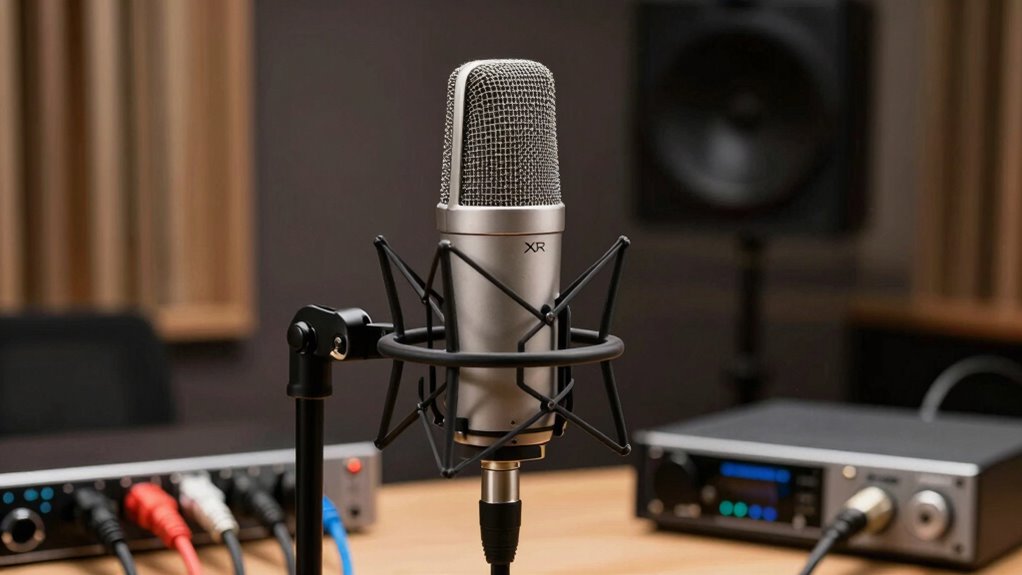
Choosing the right XLR microphone can substantially improve your audio quality, whether you’re recording vocals, instruments, or podcasts. One of the most significant factors to consider is the microphone’s polar pattern. Microphone polar patterns determine how sensitive the mic is to sound coming from different directions. For example, cardioid patterns pick up sound primarily from the front, making them ideal for vocals and speech because they reject background noise. Omnidirectional microphones, on the other hand, capture sound equally from all directions, which is useful for capturing room ambiance or group recordings. Understanding these polar patterns helps you select a microphone that suits your environment and recording needs, guaranteeing you don’t waste money on equipment that doesn’t match your setup. Additionally, assessing the polar pattern can help you choose a microphone that maximizes clarity in noisy environments or in controlled studio settings.
Another vital aspect is the frequency response range. This range indicates the spectrum of sound frequencies a microphone can accurately capture. If you’re recording vocals, you’ll want a microphone with a wide frequency response that extends into the higher ranges, capturing the brightness and clarity of the voice. For instruments like drums or bass, look for microphones with a frequency response tailored to enhance those specific sounds. A microphone with a limited frequency range can make your recordings sound dull or unnatural, so it’s essential to match the mic’s response to your application. Avoid overspending on a microphone with an extensive frequency response if your use case doesn’t demand it, but don’t compromise on this aspect, as it directly impacts the clarity and realism of your recordings. Also, consider the frequency response range to ensure your chosen mic can handle the full spectrum of sounds you intend to record.
While considering polar patterns and frequency response ranges, also think about your recording environment. If you’re in a noisy space, choosing a microphone with a tight polar pattern like supercardioid or hypercardioid can help minimize unwanted background noise. Conversely, if you’re recording in a controlled studio environment, a broader pattern might be more suitable. Budget-wise, there are excellent options available at different price points, but it’s wise to prioritize features that match your intended use. Investing in a microphone that aligns with your needs ensures you get the best sound quality without wasting money on unnecessary features.
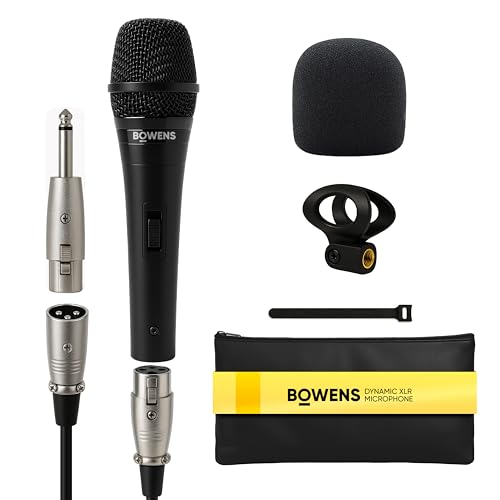
Bowens Dynamic Mic XLR – Wired Karaoke Microphone with 15ft Cable, Handheld Vocal Microphone for Singing, Dj, Podcasting, and PA Systems, Complete 7 Piece Microfono Kit
Clear Vocals & Noise Isolation – Wired dynamic karaoke microphone features a cardioid pickup pattern that isolates vocals…
As an affiliate, we earn on qualifying purchases.
As an affiliate, we earn on qualifying purchases.
Frequently Asked Questions
Do XLR Microphones Require Phantom Power?
Did you know that about 70% of professional studios use phantom power? XLR microphones often require phantom power because they depend on it for microphone polarization, especially condenser types. This power supplies the necessary voltage to activate internal electronics, guaranteeing clear sound. If you’re choosing an XLR microphone, check if it needs phantom power—most do—so you can confirm your setup provides the right power source for peak performance.
Can I Use an XLR Microphone With a Smartphone?
You can use an XLR microphone with your smartphone, but you’ll need the right adapter for mobile compatibility. Typically, you’ll require an XLR to 3.5mm or USB-C adapter, depending on your phone’s port. Make sure the adapter supports microphone input and provides adequate power if needed. Using the proper adapter allows you to connect your XLR mic directly, giving you professional audio quality on your mobile device without wasting money on incompatible equipment.
What’s the Lifespan of a Typical XLR Microphone?
A typical XLR microphone lasts around 10 to 15 years, depending on your microphone’s durability and how well you handle it. With proper care, you can prolong its lifespan and delay replacement frequency. Avoid dropping or exposing it to extreme conditions, and regularly clean the connections. Investing in a quality microphone and maintaining it properly guarantees you get the most out of your gear for years to come.
Are More Expensive XLR Microphones Always Better?
Like a sturdy oak standing tall, more expensive XLR microphones often symbolize greater quality. However, higher price tags don’t always guarantee better sound or durability. Focus on brand reputation and microphone durability to find a model that suits your needs. Sometimes, mid-range options from reputable brands provide the best balance of performance and longevity, proving that price isn’t the sole indicator of a microphone’s worth or reliability.
How Do I Troubleshoot XLR Microphone Connectivity Issues?
To troubleshoot XLR microphone connectivity issues, start by checking your cable connections, ensuring the XLR cable is securely plugged into both the microphone and your audio interface. Test the cable with another device to rule out damage. Also, verify your audio interface settings and input levels. If problems persist, try a different cable or microphone to identify if the fault lies with the equipment.

Shure SM58 Professional XLR Dynamic Vocal Microphone – Cardioid Mic for Live Performance, Studio Recording, Podcasting & Broadcasting (SM58-LC)
LEGENDARY VOCAL CLARITY: Tailored frequency response with brightened midrange delivers vocals that cut through any mix, warm and…
As an affiliate, we earn on qualifying purchases.
As an affiliate, we earn on qualifying purchases.
Conclusion
Choosing the right XLR microphone is like planting a seed for your sound journey—nurture it with research, and watch your voice flourish. Imagine your recordings blooming with clarity and depth, filling the room like a vibrant garden in full bloom. When you pick wisely, you’re not just buying gear; you’re cultivating a foundation for your creativity to grow. Trust your instincts, and let your passion be the sunlight that helps your sound thrive.

Shure VP64A Omnidirectional Handheld Microphone
Neodymium magnet for increased output and maximized signal-to-noise ratio
As an affiliate, we earn on qualifying purchases.
As an affiliate, we earn on qualifying purchases.

FIFINE USB/XLR Dynamic Microphone for Podcast Recording, PC Computer Gaming Streaming Mic with RGB Light, Mute Button, Headphones Jack, Desktop Stand, Vocal Mic for Singing YouTube-AmpliGame AM8
[Natural Audio Clarity] Operated with frequency response of 50Hz-16KHz, the podcasting XLR mic delivers balanced audio range, likely…
As an affiliate, we earn on qualifying purchases.
As an affiliate, we earn on qualifying purchases.