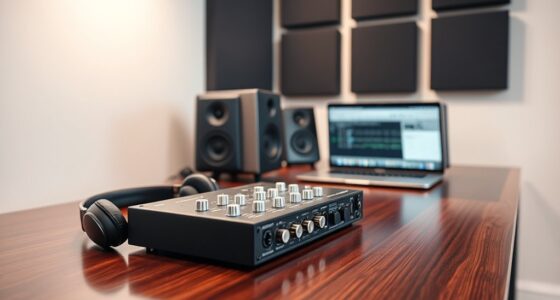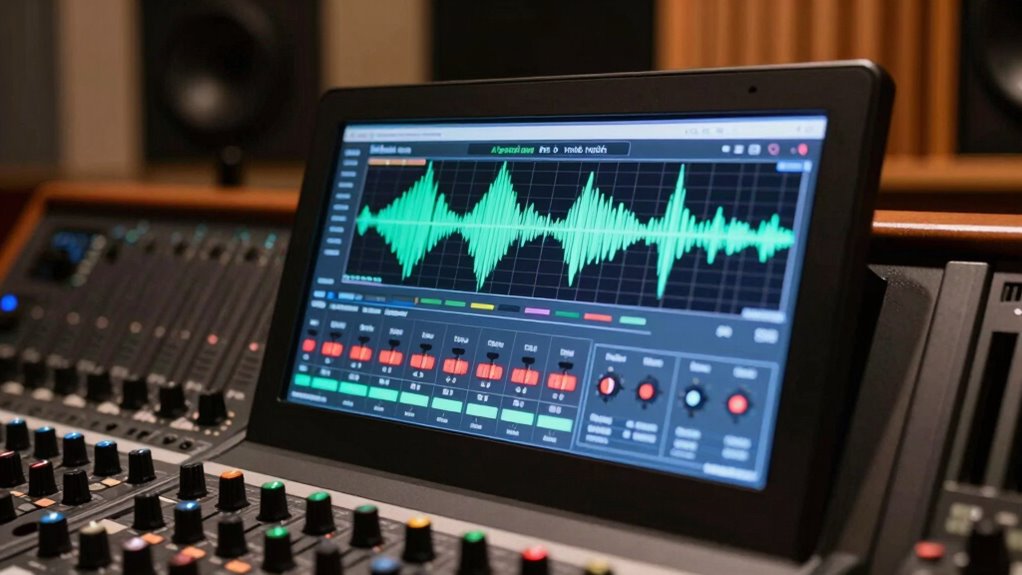
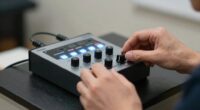
A noise gate helps you reduce unwanted background sounds and prevents mic bleed during performances, keeping your vocals clear and focused. It can fix issues like hiss, hum, or room noise, creating a cleaner sound for your audience. However, if you misconfigure it, it can cut out softer parts of your vocals or cause unnatural pauses, making your performance sound choppy or robotic. Staying aware of how to set it up properly will help you avoid these pitfalls and improve your sound.

Get everyday helpers delivered free with Prime
- Fast, free delivery on millions of items
- Prime Video, Amazon Music and more included
- Member-only deals all year
Key Takeaways
- Noise gates effectively reduce background noise and sound bleed during quiet moments in performances.
- They can cause unnatural cut-offs, making vocals sound choppy or robotic if misconfigured.
- Properly set, they maintain vocal clarity while minimizing unwanted ambient sounds.
- Overuse or incorrect settings can lead to volume pumping and loss of emotional dynamics.
- Understanding equipment interaction is essential to avoid artifacts and preserve natural vocal quality.
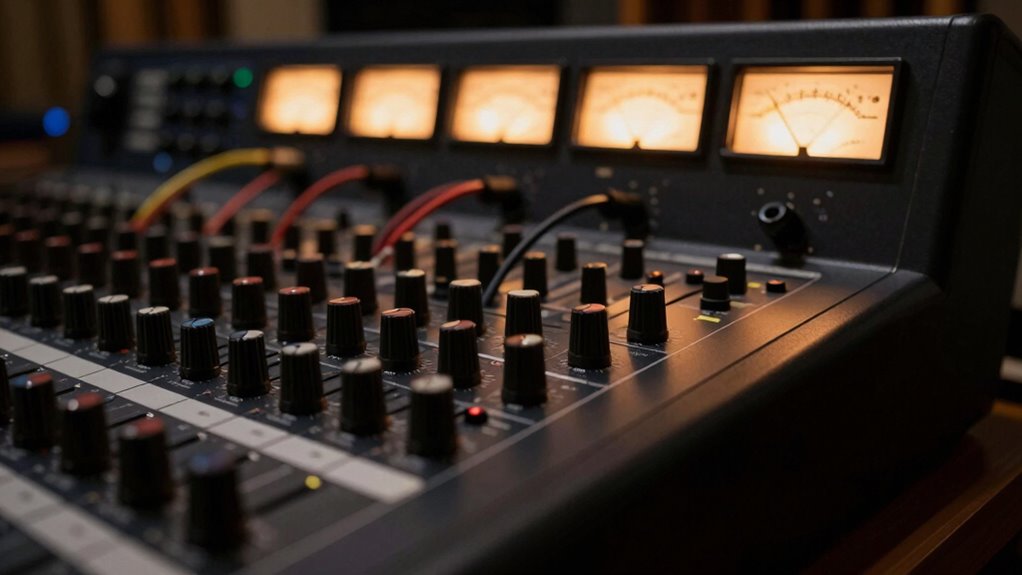
Noise gates are a popular tool for reducing unwanted background sounds, but their fixes can sometimes do more harm than good. When you’re on a live performance stage, you want your vocals to come through clearly without distractions. A noise gate can help by muting your microphone when you’re not singing, preventing background noise from slipping into the mix. It sounds simple and effective, but the reality is more complex. If you set the threshold too high, your voice might cut out unexpectedly during quiet passages, making your vocal delivery sound choppy or unnatural. Conversely, if you set it too low, background noise will still sneak through, defeating the purpose of using the gate in the first place. The goal is to find that perfect balance where your vocals stay crisp and clear, but background sounds are silenced.
Noise gates can improve clarity but risk sounding choppy or unnatural if misconfigured.
However, the use of noise gates can inadvertently ruin your vocal clarity, especially in a live setting. When you activate a noise gate, it can introduce an unnatural “cut-off” sound, which disrupts the flow of your performance. This is particularly noticeable during softer singing parts, where the gate might close prematurely, causing your voice to disappear momentarily. Such artifacts can distract your audience and diminish the overall quality of your performance. In addition, if you’re moving around on stage or changing dynamics during a song, the noise gate might respond unpredictably, opening and closing at inopportune moments. This inconsistency can make your vocals sound robotic or disconnected, rather than smooth and engaging. Properly configuring audio processing tools like noise gates requires a nuanced understanding of your equipment’s capabilities, which can be overlooked by beginners. Moreover, the overuse of noise gates can lead you to compensate with excessive vocal compression or EQ adjustments, which might further compromise vocal naturalness. Instead of enhancing your vocal clarity, these tweaks can make your singing sound hollow or overly processed. This is especially problematic during live performances where the goal is to deliver authentic, emotionally resonant vocals. When the noise gate is improperly configured, it can also cause a “pumping” effect, where the volume fluctuates awkwardly, distracting your audience and undermining the energy of your performance. Being aware of audio signal processing and how it interacts with your equipment can help you avoid these issues. Additionally, understanding the threshold and attack settings is crucial for achieving a natural sound. Adjusting these settings properly can help prevent unwanted artifacts that compromise your vocal performance. Ultimately, while noise gates can be useful, they’re not a one-size-fits-all solution. Used correctly, they help maintain vocal clarity by eliminating background noise and preventing bleed. But if misused, they risk making your vocals sound unnatural, choppy, or disconnected—ruining the very essence of a compelling live performance.
As an affiliate, we earn on qualifying purchases.
Frequently Asked Questions
Can Noise Gates Be Used on Vocals Effectively?
Yes, noise gates can be used on vocals effectively. They help improve vocal clarity by reducing background noise and unwanted sounds during quieter moments. When set correctly, they suppress background noise without cutting off the natural flow of your voice. Just be careful with the threshold and release settings, so you don’t ruin the vocal dynamics or cause unnatural cuts. Properly used, noise gates enhance your vocal recordings considerably.
How Do Noise Gates Affect Dynamic Range?
Noise gates tighten your dynamic range by suppressing background noise during quieter moments, which enhances signal clarity. They effectively reduce unwanted sounds, giving your audio a cleaner, more professional feel. However, if set too aggressively, they can cut off natural parts of your vocals or instrument dynamics, making the sound feel unnatural or choppy. Properly adjusted, noise gates balance background suppression with preserving the natural dynamic flow.
Are Noise Gates Suitable for Live Sound Engineering?
Sure, noise gates are perfect for live sound engineering—if you enjoy the thrilling game of feedback suppression and chasing sound clarity. They cut off unwanted noise, making your mix cleaner and more manageable. But beware: misused gates can cut off your sound’s soul, turning live performances into robotic monotony. So, yes, they’re suitable, but only if you’re ready to master the fine art of balancing silence and sonic life.
What Are Common Settings for Different Instruments?
For different instruments, you should adjust the noise gate’s threshold so it only cuts off unwanted noise during quiet moments. For example, set a higher threshold for vocals to reduce background hum without cutting the singer’s voice. Use frequency reduction carefully for instruments like drums or guitars to eliminate hum or hiss. Always tweak the threshold adjustment to find the right balance—too low can cut desired sound, too high leaves noise.
Do Noise Gates Introduce Latency or Artifacts?
Noise gates typically introduce minimal latency—often around 1 to 5 milliseconds—so you won’t notice much delay. They effectively improve background suppression, but sometimes, if set too aggressively, they can cause artifacts like abrupt cuts or signal clipping, making the sound unnatural. These artifacts might be especially noticeable with fast transients or dynamic signals. Overall, when tuned properly, noise gates balance background suppression without sacrificing audio quality.
As an affiliate, we earn on qualifying purchases.
Conclusion
A noise gate is like a double-edged sword—you can cut through unwanted chaos or slice away the warmth that makes your sound human. When used wisely, it tames the beast of background noise, transforming a muddy mix into clarity’s shining jewel. But beware—overreach can turn your music into a cold, lifeless echo. Master the balance, and let your sound breathe freely, a symphony reborn from the delicate dance between silence and sound.
As an affiliate, we earn on qualifying purchases.
microphone noise suppression device
As an affiliate, we earn on qualifying purchases.
As an affiliate, we earn on qualifying purchases.
Halloween Picks
halloween
As an affiliate, we earn on qualifying purchases.